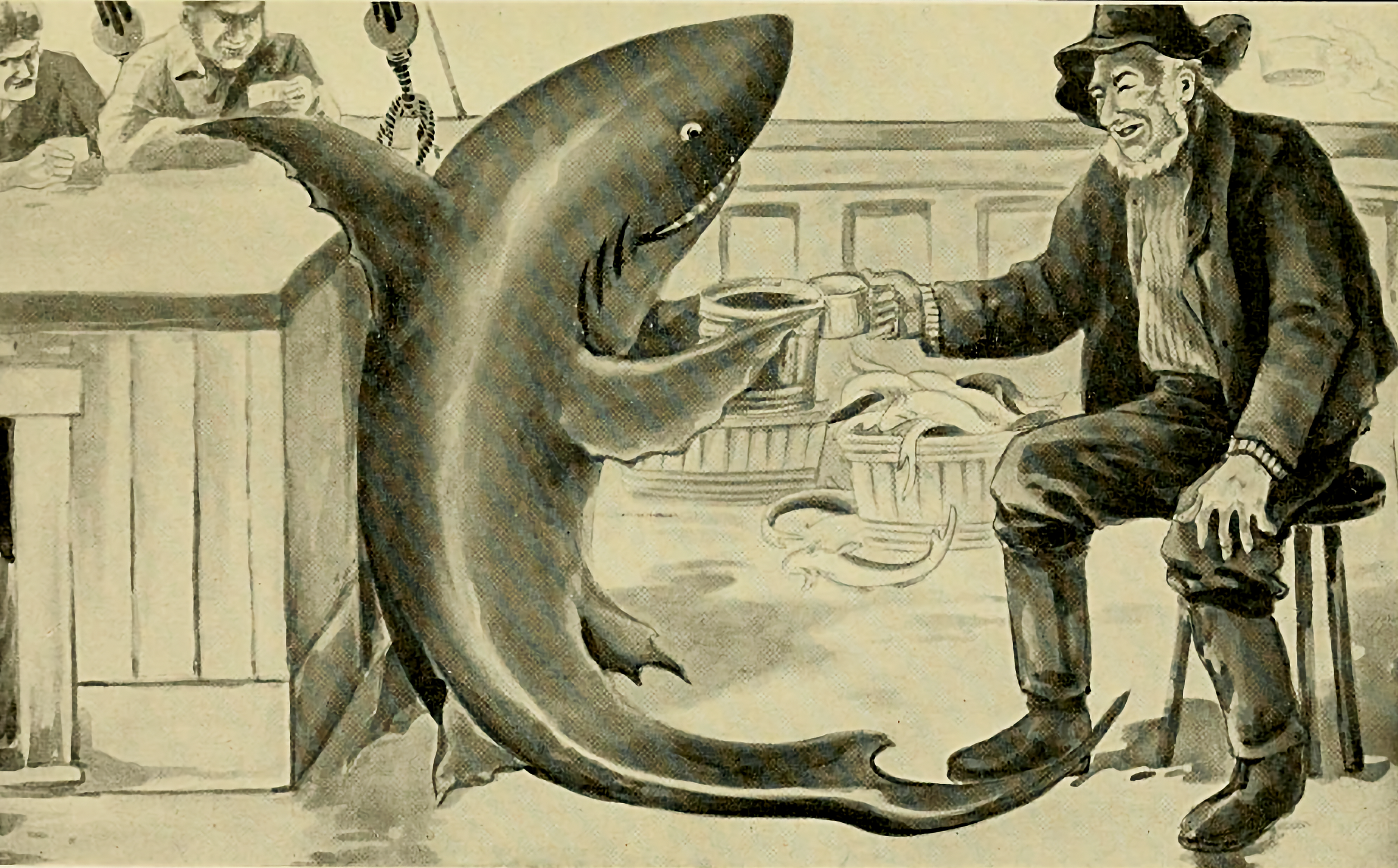
Sailors like a good story, and whether they were telling their tales by lamplight or setting them down on paper, most probably weren’t particularly constrained by the truth. Take the following as an example, it’s based on a letter that appeared in the Daily Review newspaper published in St. John’s in 1899.
I suspect it has only a passing acquaintance with fact.
A Fateful Sunday Morning
A Sunday morning swim in the Caribbean sounds like a pretty good way to start the day. A bit of sunshine, a sandy beach, and a chance to cool off sounds just about perfect… as long as you're not sharing the water with anything that considers you breakfast.
In 1899 a Newfoundland sailor by the name of R. Byrne wrote a letter to the Daily Review. In it he recalled a time he and his shipmates found themselves in Puerto Rico. They had brought salt cod to the south and were due to return north with molasses. After a hard week of work, they were feeling, as Byrne put it, “pretty mushy.” And a quick rinse in the warm Caribbean water seemed the perfect solution, so they took a boat and rowed down to a sandy stretch of beach.
It was a pleasant enough morning until Jack Holly, one of Byrne’s buddies, swam out a little too far.
As he turned for shore, Byrne spotted something in the water about 200 yards away — a shark’s fin.
Byrne and the other sailors rowed for Holly as fast as they could. They were almost upon him when the fin disappeared beneath the surface. Byrne was sure he knew what that meant. The shark had dived to ready to come up —mouth open — beneath Holly.
Holly grabbed for the boat, grasping it with both hands. The shark would be at the surface in seconds; they had to drive it off.
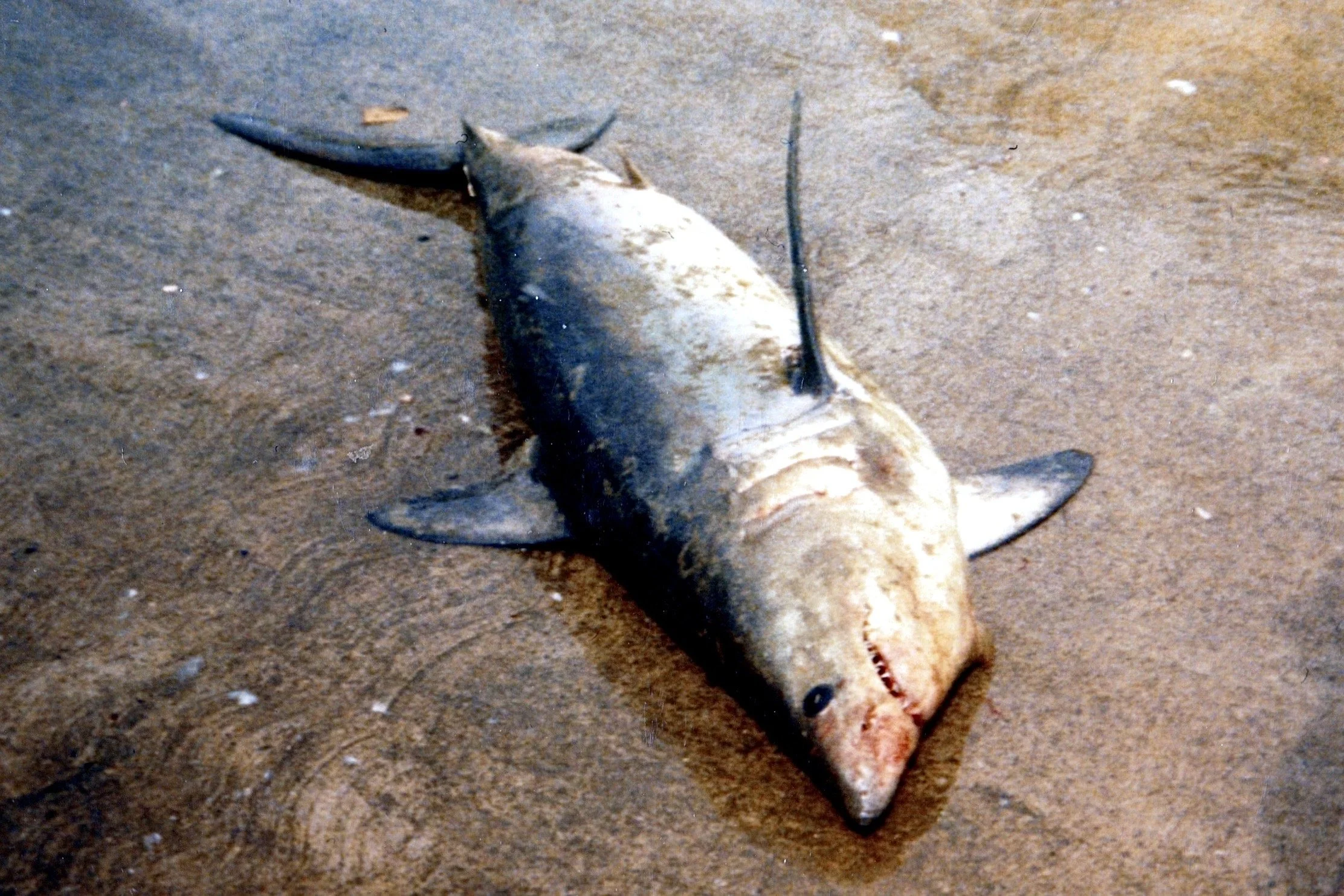
Shark caught in a fishing net, Happy Adventure, NL, Circa 1986
One sailor wielded the oar, while Byrne took up the boat hook. They thrust their weapons at the shark.
But it was no good.
In one snap, Byrne wrote, the shark “whipped the two legs off Jack from the thighs down.”
The men managed to reach the beach, but the shark followed them and stranded itself in the shallows. They hauled it high and dry with a gaff.
Holly died the next day, having bled to death.
A Long-Running Feud
For Byrne, that was the beginning of a long-running feud.
Back in St. John’s, he had a special double-barbed hook made at Molloy’s forge. From then on, wherever his work took him — the Mediterranean, West Indies or Brazilian waters — he put his new tool to use hunting sharks.
By the time he wrote to the Daily Review on August 11, 1899, he boasted that he had caught 83 sharks.
“The shark is such a hungry rover of the deep,” he wrote, “that his number can readily be diminished.” Every genuine sailor, he declared, hates the shark “worse than the devil hates Holy Water.”
Strong words.
Words that, maybe, played better in the 19th century than they do in the 21st.
Post Script
Just before Byrne concludes his letter, he offers a final post-script that takes the reader back to that fateful morning in Puerto Rico when Jack Holly met the shark.
It’s a detail he claims to have forgotten when first relating the incident. It’s not a detail that would have slipped my mind.
“P.S. — I forgot to add,” he writes, “We ripped the shark open, took out Jack’s legs and gave them a decent Christian burial.”
Odd thing to forget, I think.
It's fair to say that Byrne's postscript was... ahem… no small footnote.
-
Wage War Against Sharks, Daily Review, August 14, 1899