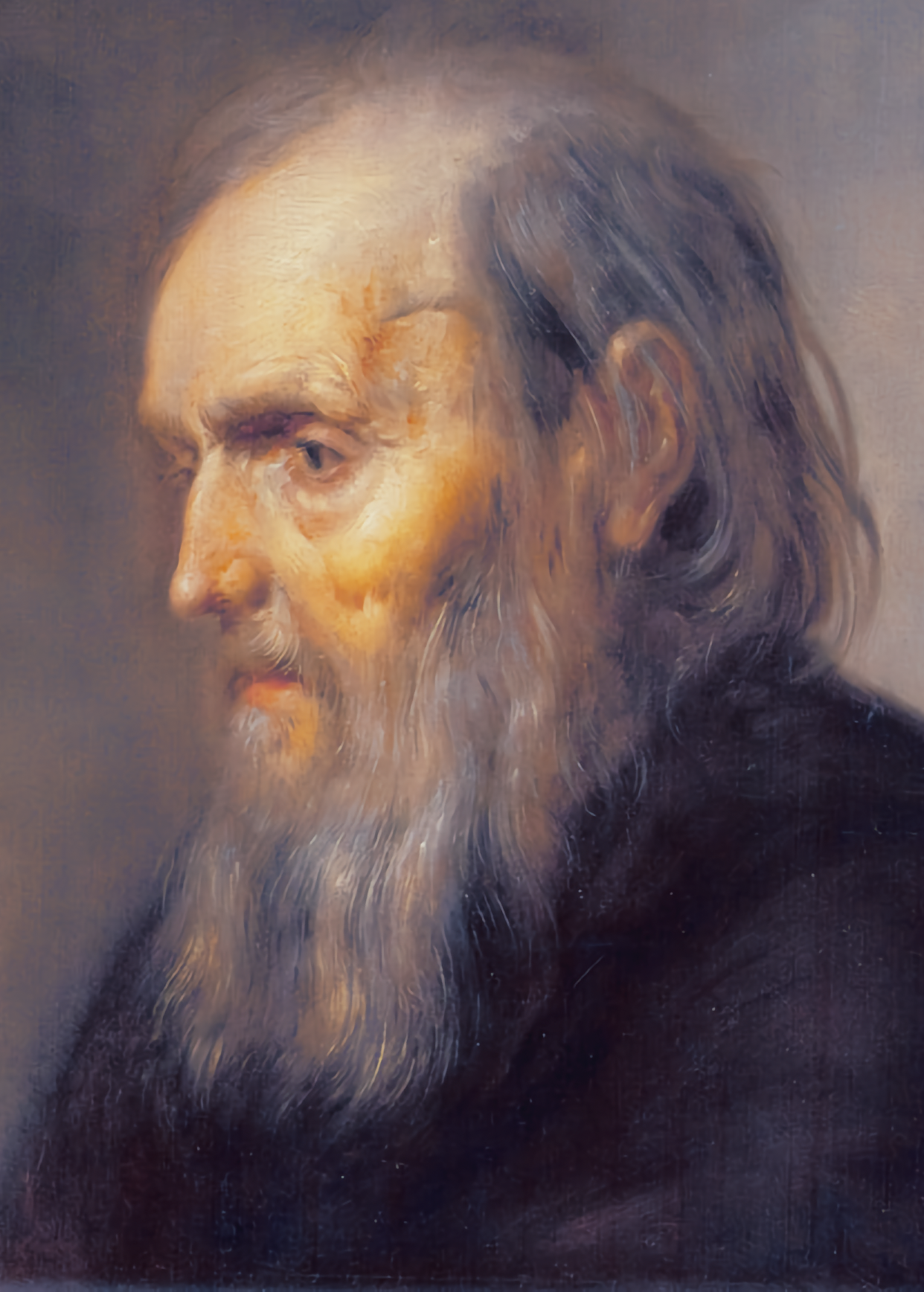
Portrait of an Unknown Man (edited), Franchoys Elaut, Public domain, via Wikimedia Commons
It was December 2nd, and George Gaulton was definitely dead. His final breath had been witnessed by a small collection of family who had gathered to see him through his last hours.
Most people who knew him considered it a blessing in disguise.
In his younger days, he had been fiery and independent. He was doggedly determined to keep his fishing premises —and all of Savage Cove— to himself. He rebuffed the attempts of any other would-be settlers to his stretch of coastline. For years, he, his wife, and their children were the cove’s only year-round inhabitants. In time, his resolve softened and other families began to settle.
By the time he turned 90, he was thankful for it. The once-vital man was confined to his bed. He lay there for months. His days were long, and the autumn nights longer still. By the end, one of the few pleasures left to him was the company of neighbours and visitors who came to sit at his bedside.
One of those visitors was the local missionary, Frederic Lloyd. He stopped by Gaulton’s homestead in Savage Cove whenever he could.
In Lloyd’s estimation, the old man had made peace with his fate and, indeed, with his life. Lloyd welcomed him —practically begged him— to unburden his mind, to confess any misgivings or troubles. But Gaulton assured him that all was well, that there was nothing bothering him, and that he would die with a clear conscience.
It seemed to Lloyd that he was sincere.
So, on December 4th, 1883 when they laid George Gaulton in the ground, it was with a certain degree of peace. He had lived to a ripe old age and, to all appearances, his final rest was well-earned.
But well-earned or not, George Gaulton would not rest. At least not for some time. Frederic Lloyd recalled the strange events of the weeks following Gaulton’s burial and chronicled the incident in his book Two Years in the Region of Icebergs: And What I Saw There.
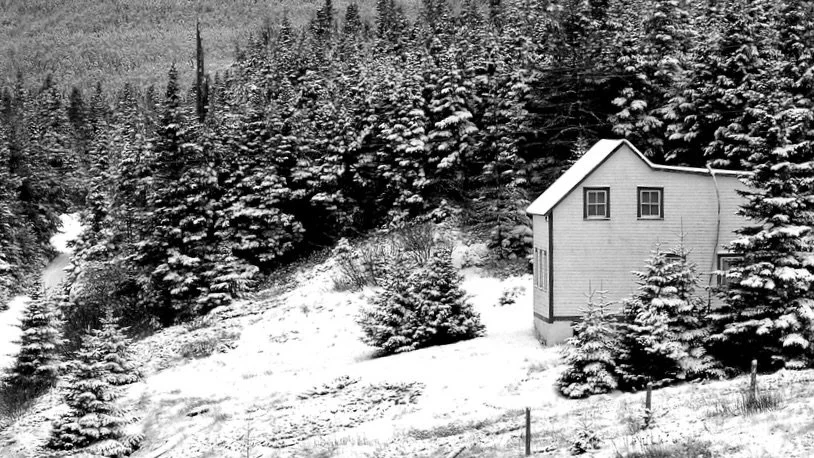
James Shenicks
In the late 19th century it wasn’t easy to get word from one Newfoundland coastal community to the next. It took time. Word of Gaulton’s death hadn’t yet travelled as far as Port aux Choix, where Gaulton’s old friend James Shenicks lived..
It was December 15th, a full eleven days after Gaulton was laid to rest, and Shenicks was in the woods, cutting timber. He had no reason to suspect that Gaulton had died, and no reason to suspect the day should not unfold like any other.
He expected it to be hard work. And it was.
The best trees, he thought, always seem to lie just slightly too far off the path than and always just beyond a snowdrift, or in a tangle of half-frozen goldwithy.
As he worked his way deeper into the forest, the sound of his steps seemed to die almost as soon as they fell the snow. This time of year the woods seemed too quiet. Winter brought a stillness, he thought, that was absent the rest of the year; a strange silence that could be felt as much as heard.
Then came a sound — a soft crunch in the snow. It sounded as though it were directly behind him.
He stopped.
Maybe it was a rabbit moving through the undergrowth.
Then came another crunch.
This one sounded unmistakably like a footstep. And it was close.
He turned quickly.
There was nothing there. Nothing but the trees and the snow, and behind him, the trail of his own footprints weaving back through the forest.
Before he could turn back, he heard it again, the footsteps. This time someone was on the path ahead of him! He spun around, but there no sign of anything. The path was an undisturbed sheet of white. Nothing had been moving there, no animal and certainly no man.
It must have been a trick of the forest, he decided. Maybe the creak of a tree, or snow toppling from some high branch.
He tried to laugh it off. After all the winters he’d spent in the woods, for him to be jumping at falling snow, well, it was ridiculous.
Still…
He paused and looked at the trees around him. They were probably as good as any he’d find deeper in the woods. There really was no reason to push on any farther.
He lifted his axe and swung at a nice spruce. The sound seemed dead, just a dull thud. There was no reverberating crack, not like you’d expect to hear when a heavy steel blade hits a tree, and no echo returned from the surrounding hills.
He couldn’t help but notice that no snow fell from the branches, either. In fact, there didn’t seem to be any snow lingering on the trees anywhere around him.
That’s when he heard the footsteps again.
This time, they seemed to come from all around him. A soft crunching just ahead of him, then to the left, until it seemed to be directly behind him.
He turned slowly, trying to see between the trees.
Nothing.
Shenicks called out.
There was no response.
The footsteps continued.
He listened for something, anything else — the rustle of a branch, the snap of a twig, maybe a grouse bursting into flight — but there was nothing. The woods were completely still.
Except for the footsteps.
He sighed. He must be hearing things.
He looked at the tree to his right and swung the axe. Again, and again he struck the trunk trying to drown out the sound of the footsteps but they didn’t stop.
They seemed to be moving through the trees all around him. He felt the hair stand-up on the back of his neck. It was unsettling, not just the sound, but the whole atmosphere of the place was wrong. Part of him wanted to go home, to leave the woods and to never return, and another part wasn’t sure if he could live with himself if he did. He didn’t like to think of himself as cowardly, as man that would run from a sound in the shadows.
So he stayed, and worked. All the while the pacing continued to circle around him.
By mid-afternoon, he had cut and limbed a decent pile of spruce. The December sun was low, and it was time to head home to a warm fire and a cup of tea… and away from the infernal footsteps.
He hoisted his axe to his shoulder and started down the trail.
Was it his imagination, or were the footsteps getting louder? Even closer?
Crunch after crunch, they followed him. The faster he moved, the faster they moved. Until he was running, running to keep ahead of them.
By the time he reached the edge of the woods, he was out of breath. He couldn’t bring himself to look back. As he broke free of the forest, the sound seemed to stop.
He didn’t look back. He kept his eyes fixed on his homestead ahead.
By the time he reached the house he was out of breath and dizzy.
He burst into the house, shook the snow from his boots and settled himself beside the fire with a cup of tea.
The warmth seemed to help.
He turned the day’s events over in his mind. He’d let his imagination run riot, he was sure of it. And once he’d started listening for “footsteps,” he’d begun hearing them everywhere.
There was nothing to be made of it. It was foolish to have been frightened. By bedtime, he had almost convinced himself.
Back To The Woods
Morning dawned grey and damp. He lit the fire and, while the kitchen warmed, went to check on his animals.
He had a small number of cattle that required tending. The hay he’d cut the previous summer was holding well and, in the cold months, it provided the bulk of the feed for the farm. He left a generous meal for the cows, enough to last them the day, perhaps two.
For a moment, he thought of spending the morning there, in the barn. There was no shortage of work. He could be productive, right there at home.
Shenicks glanced toward the trees and sighed.

Winter was the time to work in the woods. It was much easier to haul the trees across the ice and snow than over the wet, boggy terrain he’d have to contend with the rest of the year.
It was better to do it now than wait.
He went back to the house, ate breakfast, and pulled on his coat.
He paused at the door for just for a moment, pulled his coat tighter and headed back toward the woods.
His footprints from the day before were still visible in the snow. He stopped for a moment and looked at them. They were so far apart. His strides had stretched him across the snow at a distance he’d have hardly thought possible. He had certainly run home.
The snow-covered field soon gave way to scraggly spruce, which in turn gave way to a thick tangle of taller trees. It was dark beneath them. The grey morning light barely reached the forest floor.
He looked up. Already the clouds were considerably thicker than when he had left the house. A change in the weather was coming, and it wouldn’t be for the better.
He picked a good tree and swung the axe. The crack of the blade had barely died away when he heard them again.
Footsteps. Behind him.
He was determined to ignore them. He swung the axe again and again. With each strike, the footsteps seemed to come closer. Again the hair stood on his neck.
He glanced over his shoulder. Nothing.
He turned back to the tree and swung again.
The footsteps came closer.
Another swing.
The footsteps were almost upon him now.
He raised the axe and brought it down with all his strength.
The tree shuddered and the trunk gave a deep, splintering crack and began to fall.
He watched it topple through the trees, branches tearing against branches, until it crashed heavily onto the forest floor.
For a moment, he simply stood there, staring at it.
The footsteps had stopped but he knew there was someone —something— right behind him. If he turned around, if he reached out, surely he could touch whatever had been pursuing him.
He couldn’t breathe. He couldn’t move.
The world seemed to have narrowed to the space between his back and whatever stood behind him.
Then everything stopped. And in that stillness, he felt it.
He had no words for it. Only the sense that whatever was there had come a great distance and it wanted him. He could almost imagine its icy fingers on his shoulder, drawing him closer. As though it needed him to lean in. As though it needed him desperately —
Cold rain struck his face.
He blinked. Then another drop hit his cheek, cold enough to make him shiver.
He blinked again, and the forest came back into focus. The fallen tree lay before him. The axe was still in his hand. The branches above him were moving in the rising wind.
He turned his head.
There was nothing behind him. Nothing but trees.
He looked up into the darkening sky. The rain wasn’t going to stop anytime soon. There was nothing to do but head home.
He started down the trail, listening —waiting- for the footsteps but they didn’t come.
He walked a little farther. Still nothing, just the soft patter of rain on snow.
For the first time since he had entered the woods, he felt alone.
By the time his house came into view, he felt the tension of the morning —and of the last day and a half— beginning to leave him. Whatever had come with the footsteps, whatever strange stillness, seemed to have been washed away by the rain.
It wasn’t something he could properly explain. Not to himself, and certainly not to anyone else.
Back to the Barn
Shortly after noon, Shenicks was sitting in his kitchen, finishing a second cup of tea. The room was warm and comfortable. Part of him was content to stay there. There was little appeal in venturing back outside into the driving rain.
But, as always, there was work to be done. Too much, perhaps, to waste an afternoon sitting by the fire. He hardly knew where to begin.
His first thought was the cows.
He didn’t know why. He had fed them already and left them plenty of hay, more than enough for the day. There was no need to check on them again.
But he found himself thinking about the hay-pook. He felt as though he should check it, just in case… in case… he couldn’t think of a good reason.
Still, he set down his tea, pulled on his coat and went out.
The rain was still coming down steadily. He stood for a moment, looking at the hay pile. Everything was fine, just as it should have been.
Then, out of nowhere, came a voice. It was familiar, but for a moment he couldn’t place it.
He turned.
George Gaulton
There stood his old friend, George Gaulton of Savage Cove.
James stared at him.
He hadn’t seen hide nor hair of the man in months. He had heard, though, that George hadn’t been getting out much lately, but he looked well enough now.
It was a real surprise.
Gaulton didn’t just come to Port aux Choix everyday, and he certainly didn’t walk up to his hay-pook, in the middle of a December rainstorm. It was odd.
Still, it was nice to see the man, and as they talked, it seemed as though no time had passed between them. They chatted about this and that — the weather, the fishing, the usual things.
But George clearly had something on his mind.
Finally, he came to the point.
He had a message for his eldest son, back in Savage Cove. He needed James to deliver it, and to make sure it reached him before the end of March.
It was a strange request.
Hadn’t George just come from Savage Cove? And wouldn’t he be going back there soon? Surely he would find himself back home long before James would, and well before the end of March.
But James could see that it was important to the old man, so he agreed.
George nodded, whispered his message, turned to walk away and was gone, he seemed to disappear into the air
James stood beside the haystack, alone. He felt his pulse quicken, the blood seemed to rush in his ears. All the fear, all the tension, and all the unease of the last two days came rushing back.
The cold rain streamed down his cheeks, and a strange chill seemed to settle in his chest.
He was certain of two things. The old man had been there — in the woods, and then beside the haystack. And George Gaulton hadn’t come from Savage Cove, he’d come from somewhere much further away.
The man James had just spoken to — his old friend— was no longer among the living. He’d heard of ghosts and fetches but he’d never believed in them. Not till now.
But how else could he explain it. Old George must have died before his work on earth was not finished, he reasoned. The old man still had something to say —a message for his son— and somehow, he’d decided that James was the man for the job.
There was nothing to do but honour his wishes.
The Missionary’s Tale
As Frederic Lloyd, the missionary recalls it, the Christmas season came and went before James Shenicks could make the trek to Savage Cove.
When he delivered the message, he learned that George Gaulton had died trying to tell his son something, but had never been able to make himself understood.
If Lloyd knew what the message was, he didn’t record it. He does tell us though what he thought of the tale. He considered it an “authentic” ghost story — a strange account involving people he knew, and one he had little reason to doubt.
Whether you place your faith in the recollection of a 19th-century missionary is another matter.
Lloyd recorded what he believed happened —
What you make of it, well that is up to you.
-
Two Years In The Region of Icebergs, Frederic E. J. Lloyd, 1886?
Le Petit Nord; or Annals of a Labrador Harbour, Anne Grenfell and Katie Spalding, 1920
Vignettes of the West, The Ghost of the Coast, Don Morris, Western Star, June 14, 1975
The First Settlers on the French Shore, Canon J.T. Richards, Newfoundland Quarterly, Vol. 52, No. 4, December, 1953
Savage Cove, Encyclopedia of Newfoundland and Labrador
Frederic Ebenezer John Lloyd, Encyclopedia of Newfoundland and Labrador
Anecdotes of 100 Years Ago, Vignettes of the West, Western Star, March 27, 1982
The Voice of Don, Evening Telegram, March 03, 1963