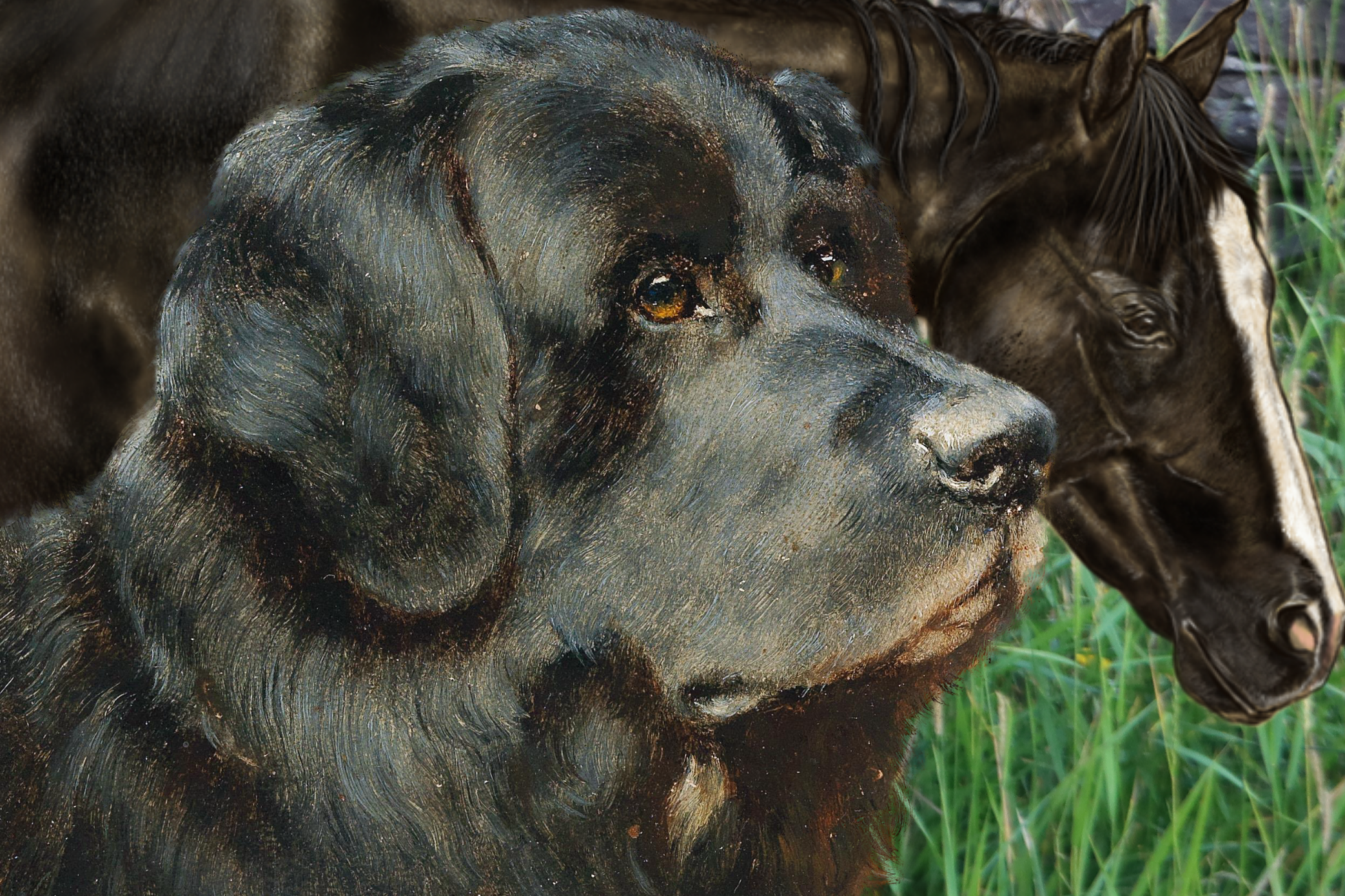
The longer I live, the more convinced I am that dogs are superior to people in almost every way—and nothing in this story challenges my belief in the slightest.
The following account appeared in the Evening Telegram on December 22, 1882. It tells of a dog and a horse whose lives ended far too soon, in a way that will be upsetting for many people.
If that’s not the kind of story you’re up for today, feel free to skip this post.
In the Days of Dogs and Horses
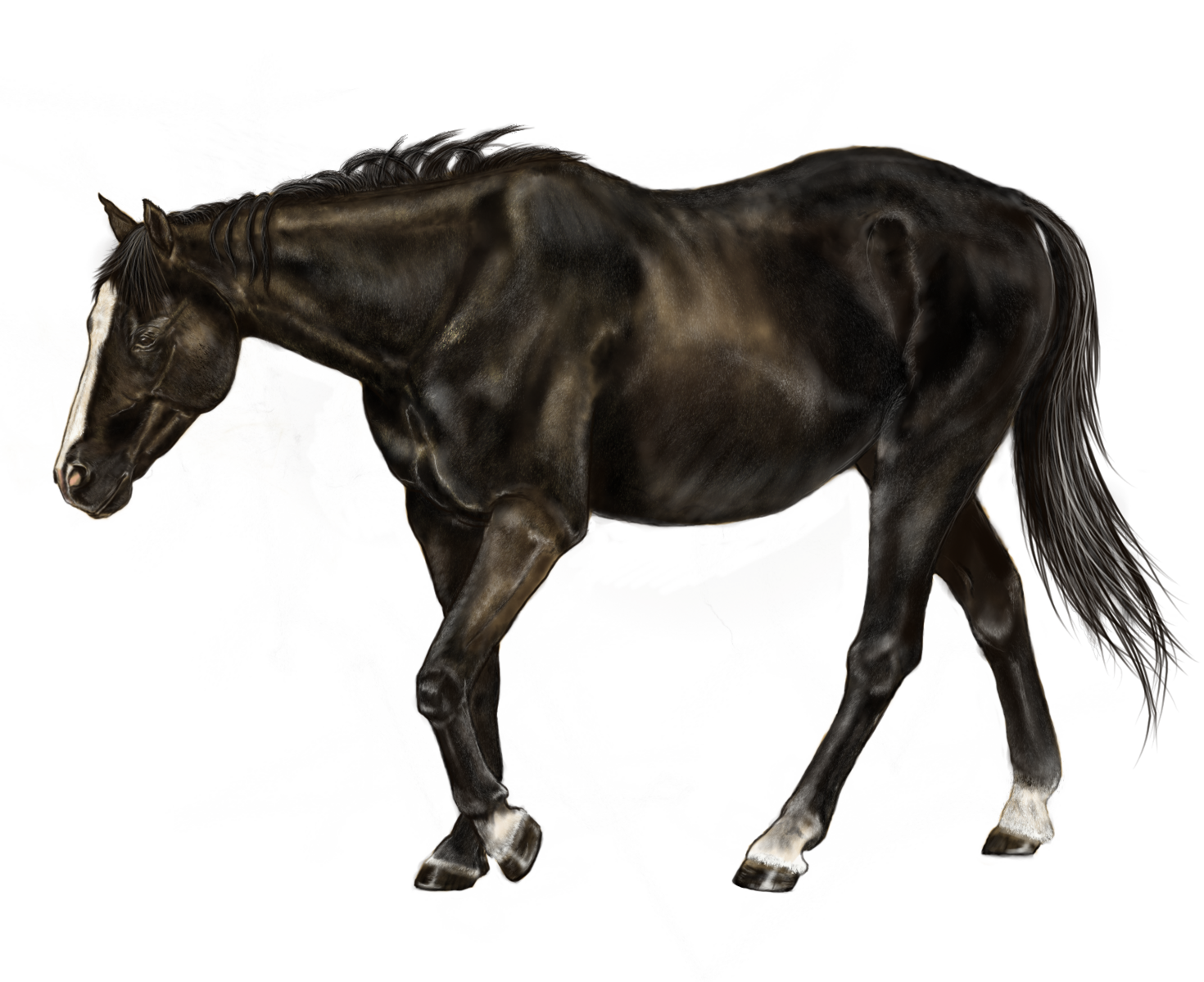
Horse, N1111, CC0, via Wikimedia Commons
Not so long ago, horses were everywhere in Newfoundland. By the early 1900s, more than 16,000 lived on the island. They first took hold in St. John’s and the northeast Avalon, where the earliest roads made them essential for hauling carriages, goods, and people—at least until motor vehicles arrived.
Outport life was different. With most travel happening by boat, horses were slower to catch on. When muscle was needed on land, people relied instead on dogs to pull lumber, carts, and sleds with steady determination.
These were working animals, not pets — though many were surely loved.
Loyalty
Whether from age, illness, or injury, every working animal eventually reached a point where it simply couldn’t do its job anymore. When that happened, a responsible owner had a difficult choice to make. Keeping an animal that could no longer work was expensive, and in many cases, the only viable option was euthanasia.
A humane owner would insure death was quick and as painless as possible, but sadly not every owner was humane. Some people, when their horses were no longer suitable for work, simply turned them out, leaving them to fend for themselves. In many cases those animals starved.
According to accounts, one such horse in St. John’s found its way to Quidi Vidi Road and somehow made its way into Hospital Field — which was gated. No one could understand how the animal had gotten into the field but it turns out he had a friend.

A Newfoundland Dog, Carl Reichert, Wikimedia
A Newfoundland dog, owned by the same man, followed him everywhere.
The dog was so devoted that he wandered with the starving animal day and night, even managing—somehow—to lift the gate latch with his paw to let his hungry companion inside in search of food.
But the dog’s loyalty couldn’t save him.
The horse was eventually found dead on Forest Road, and the Newfoundland dog was still at his side, refusing to be moved. He fought every attempt to pull him away. He was so fiercely protective of his fallen friend that, in order to remove the horse’s body, the dog was shot.
Both animals deserved far better.
Shames & Disgraces
An 1882 newspaper wrote of the dog: “His noble fidelity to a brother brute doubly shames and disgraces the humanity of the man… We desire to bring the matter to the special attention of the Police with a hope that such barbarity may be arrested and vigorously repressed.”
Whether the owner was ever held accountable, I don’t know. Records from that year show only two prosecutions in St. John’s for cruelty to animals.
Did This Really Happen?
The story appeared in local newspapers as fact — and really, it’s hard to imagine anyone inventing something so bleak and unsatisfying. Still, I have my doubts.
I mean, if people noticed the dog opening the gate to let the starving horse into Hospital Field, why didn’t someone step in? Why wait until both animals were dead and only then write a moralizing newspaper piece about it?
The editors of the Harbor Grace Standard seem to have shared my concerns. They wrote: “Strange that this inhuman conduct should have been practised so long without someone calling the attention of the authorities to it: stranger still, if now it remains unpunished.”
Legacy
Doubts aside, the story pushed the Standard to issue a clear call: “What is much needed here is the establishment of Societies for the Prevention of Cruelty to Animals.”
Five years later, in 1887, that call was finally answered. The Society for the Protection of Animals was founded in St. John’s, marking the beginning of organized animal welfare in Newfoundland.
And if nothing else, perhaps the story of one loyal Newfoundland dog — and the needless loss of two animals — helped spark the change that would protect countless others.
-
Fatal Affection of a Newfoundland Dog, Evening Telegram, Dec 22, 1882
Horses, Encyclopedia of Newfoundland & Labrador
SPCA, Encyclopedia of Newfoundland & Labrador
Criminal Statistics, Evening Mercury, Jan 25, 1883
“We published to-day…” Harbor Grace Standard, Dec 30, 1882
“We have from time to time…” Evening Mercury, Dec 22, 1882