Escape from Gull Island
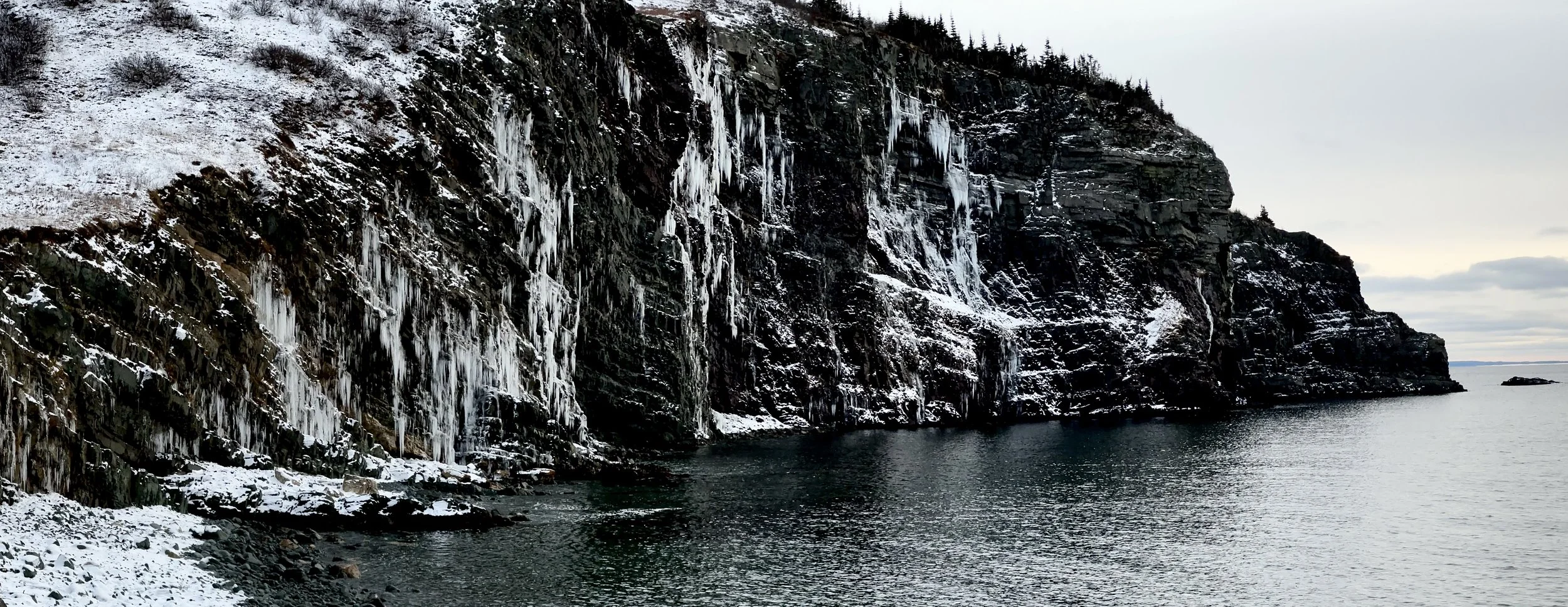
One of the saddest ‘Christmas stories’ I’ve ever heard is the tale of the wreck of the Queen of Swansea on Gull Island, about 8 km off Cape St. John, the northeastern point of the Baie Verte Peninsula. The survivors were stranded on the island during Christmas, wasting away and forced to make some horrific choices — but it was all in vain.
None of them survived.
Read the story of The Queen of Swansea
We know what happened because some of the castaways were able to record their experiences in letters and journals that were discovered the following spring.
But there’s a happier tale told about the Christmas season on Gull Island, too.
This one involves another stranding — and an ingenious escape — that allowed the survivors to recount the tale for themselves.
Escape from Gull Island
It was just after Christmas Day, 1878, when Charles Coombs and Joseph Rex set out in a small boat from Round Harbour in Green Bay. The men were heading out on a hunting expedition, hoping to shoot seabirds to help keep the cupboards stocked for winter.
They knew the coast, and they knew winter weather was unpredictable, so they took precautions. They packed enough food and drink to last two weeks, should they become stranded.
It was a decision they’d soon question.
A Storm
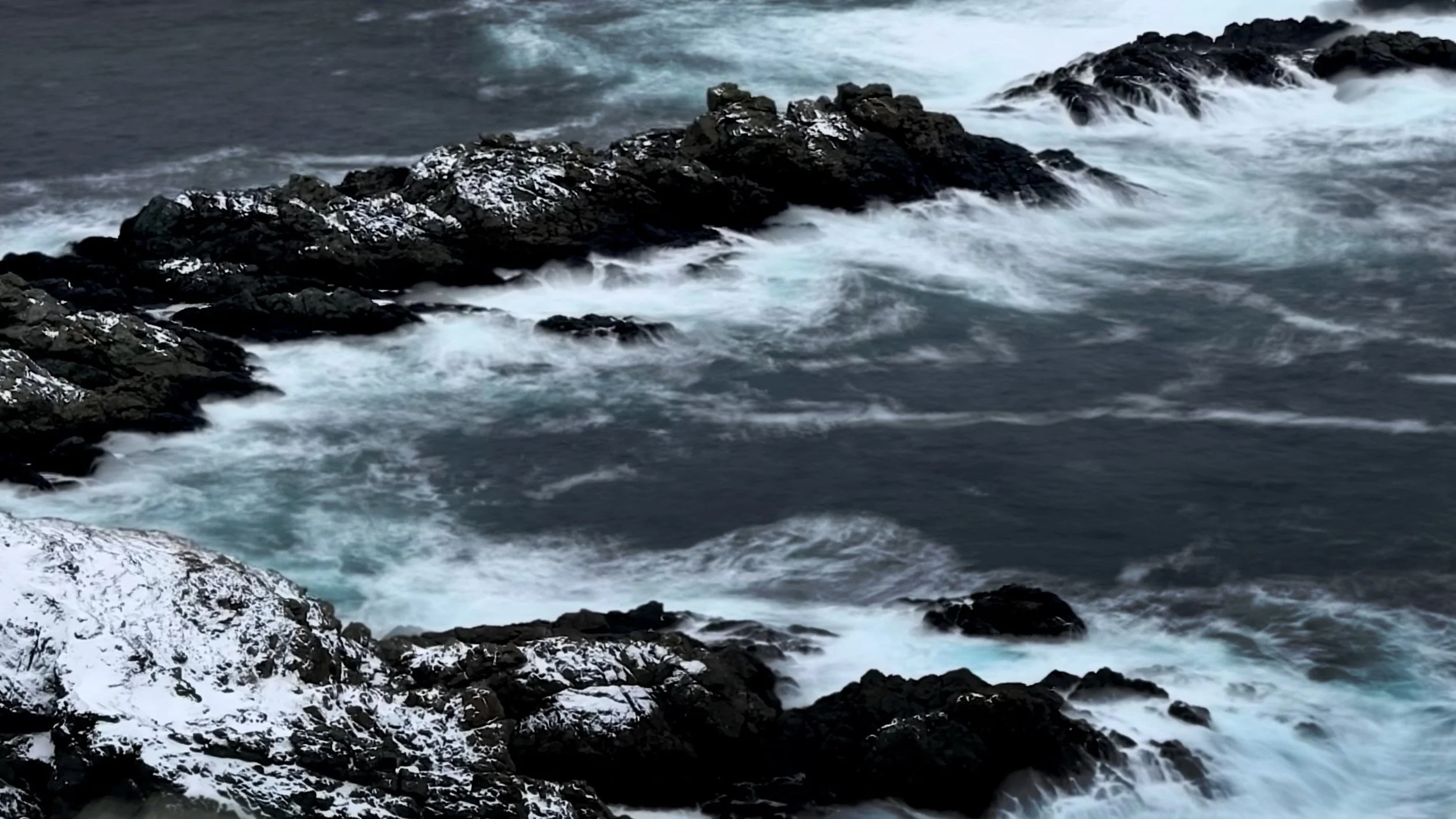
The men made it to Gull Island, hauled their boat ashore, and tied it up.
The island wasn’t much more than a barren rock. On one end stood a small wooden cabin, built some years prior by the owners of the nearby Tilt Cove Copper Mine to offer shelter to hunters.
The men set about their hunt. The birds, if not plentiful, were abundant enough that they soon had a decent harvest.
As they worked, the sky turned dark. The clear December day erupted into a furious winter storm.
The men took shelter in the wooden cabin. It was rough and weather-beaten but far better than facing the elements unprotected.
Outside, the wind tore across the barren rock and whipped the sea into a frenzy. Giant waves crashed on the shore. There was nothing to do but bunk down and wait for the weather to pass.
All night long the little shack bent and twisted under the force of the gale, but when dawn came, the sky cleared and the wind dropped away.
The storm had passed. They’d be able to go home.
A Disaster
As they approached the boat —or the place the boat should have been— their hearts dropped. The rope they’d used to tie it was still in place, but the boat itself was gone. The storm must have ripped it from its mooring and swept it out to sea, along with the bulk of their emergency provisions.
They were stranded. Stranded on the same island that had defeated the castaways of the Queen of Swansea little more than a decade before.
It wasn’t good. Not only were they stranded without food, but their friends and family knew they’d taken provisions to last two weeks. No one was going to come looking for them — at least not for that long.
They took stock.
All they had was the shack, the small amount of food they’d brought into it for the night, and an axe.
An Escape Plan
They formulated a plan: if they dismantled the shack, perhaps they could use the lumber to build a boat. It wouldn’t be fancy. It might not even be seaworthy. But it was their best shot.
They began taking the cabin apart. Piece-by-piece, they collected the lumber. Using the axe, they straightened out the rusty nails. Soon their shelter became a pile of building materials.
They began assembling the boat. They found some oakum —pine-tarred rope—and used it to fill the seams between the planks. But without pitch, it wouldn’t be watertight, and the boat wouldn’t float.
They had few options, but one thing they had in abundance was cold winter weather. In place of pitch, they drenched the seams with water and let it freeze into solid ice, praying the frozen ‘glue’ would hold the boat planks tight.
Day after day they worked on their boat, and by January 6th — Old Christmas Day — it was ready.
It wasn’t pretty, but God willing, it might float.
The tired, hungry men boarded the craft and set out.
A Daring Attempt

They had no oars, so two slabs of wood served as paddles. They worked their way toward the nearest point of land — Cape St. John — an 8 km journey.
They had little reason to be hopeful. If someone had asked them to set out from home in this craft, they’d never have done it.
It would have seemed foolish to head out onto the North Atlantic in January in a boat made of old clapboard, rusty nails, and ice. But under the circumstances, this ramshackle craft felt like a lifeline.
They paddled onward, praying the sea would stay calm. Soon, Cape St. John loomed ahead.
As they drew close, they saw the cliffs of the Cape, covered in ice. Even if they made it ashore, they’d never be able to climb over the slippery rocks and get away from the sea. They’d be stuck on the rock, at the mercy of the surf.
They quickly decided their makeshift boat would have to last a bit longer. Instead, they turned toward the nearest settlement — Shoe Cove.
So onward they went.
By the time the houses of Shoe Cove came into view, their faith in the craft had grown. They decided they might as well continue on to Tilt Cove, a larger and better equipped settlement.
When they finally arrived, they pulled the boat up on the beach. Their make-shift vessel had done its job. They were safely ashore.
The boat remained in Tilt Cove, as a subject of much interest, until spring.
They’d taken their craft nearly 25 km.
The men had used ingenuity, skill, and sheer bravery to save themselves.
The story spread, and many doubted it. But for years afterward, those who visited Charlie Coombs’ stage in Round Harbour could gaze upon the boat with their own eyes and marvel at the tale —told by the man himself— of the Old Christmas Day he and Joseph Rex had sailed home in an old shack.
Notes & Questions
This story has been told again and again. it’s almost always presented as factual. And maybe it is.
The earliest written account I’ve been able to trace comes from H. F. Shortis in 1918, who claimed to have heard it directly from Rev. Arthur Pittman of Trinity East.
From there, the details begin to change. Shortis writes that the men found a hammer on the island, used leftover boards from the shack’s construction, and even managed to salvage the oars from their lost boat.
Later tellings reverse those specifics entirely. In some versions, there is no hammer at all. The shack must be dismantled. The oars are gone, and replacements are just planks from the shack.
So where does the truth actually lie? And how much of this story deserves to be treated as fact rather than fiction?
I’d hard to say. I’ll admit I approach it with a fair bit of skepticism. With shelter, firearms, and access to seabirds, the decision to launch themselves into open water in a poorly built craft feels difficult to justify.
On the other hand, Gull Island offered little in the way of resources. Firewood would have been scarce, and hypothermia was a constant threat. Seen that way, staying put may not have felt safe; it may have looked like slow death. So perhaps taking their chance on a makeshift boat did look like the better option.
One thing I am sure of: I hope I’m never faced with a decision like that myself.
-
Escape By Ingenuity, Sea Stories from Newfoundland, M. Harrignton, 1958
It Was A Risky Goal To Set, D. Morris, Gander Beacon, Oct 5, 1977
The Voice of Don, Evening Telegram, April 12, 1961
Tilt Cove, Decks Awash, July-August, 1992
Marooned on Gull Island, The Newfoundland Quarterly, Vol. 018, December 1918
Saved By A Makeshift Boat, Newfoundlander, July 1947