The Schoolmaster’s Christmas
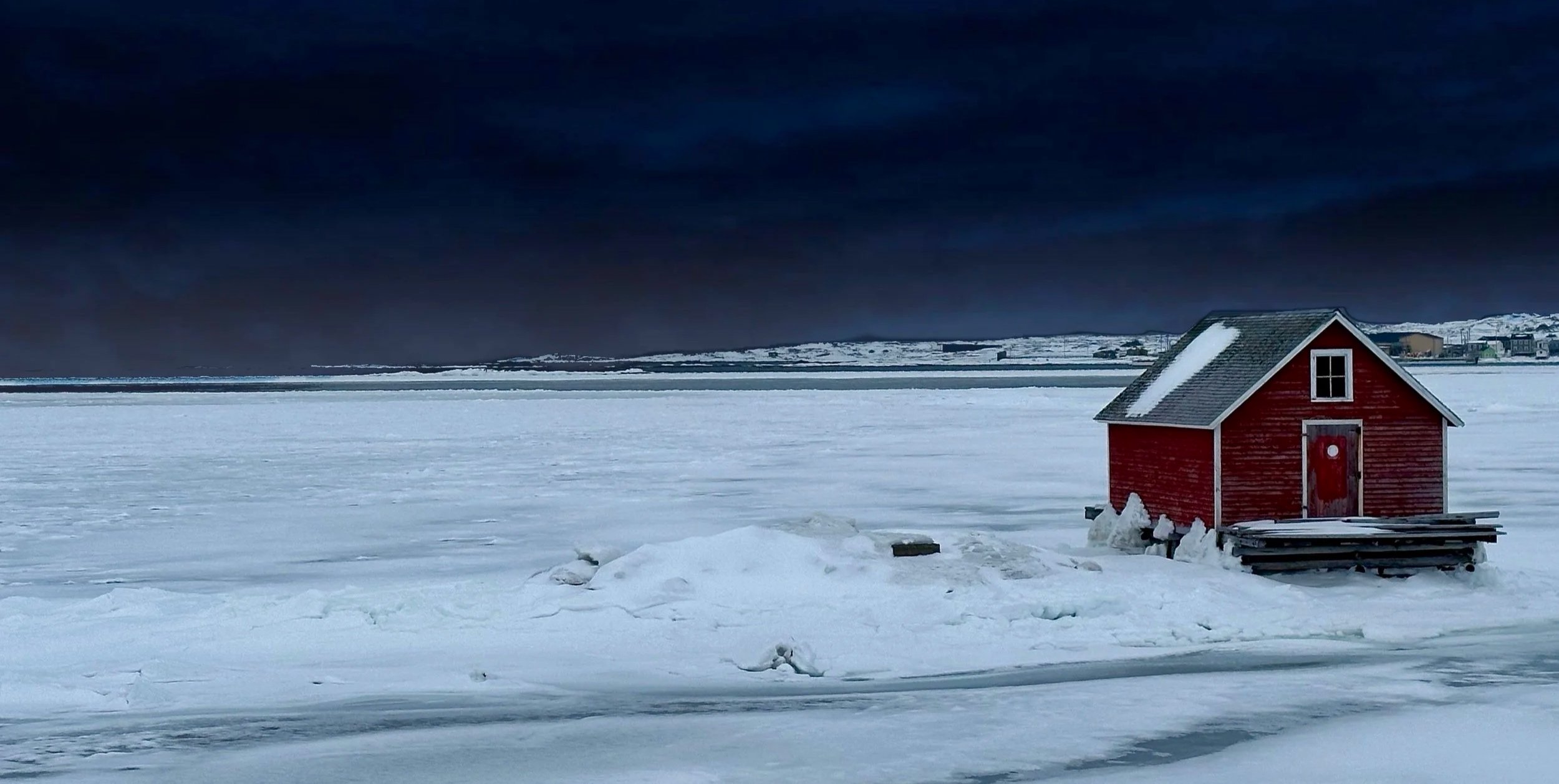
Fogo Island, NL
In 1876, a young schoolteacher set out from St. John’s just days before Christmas, bound for a northern outport he had never seen. What he experienced along the way — loneliness, kindness, and a new appreciation for Christmas — stayed with him for the rest of his life.
His journey took him to Trinity and Fogo. He recorded his adventure in an essay that was published in the Colonist Christmas Number in 1890.
The following is based on his story.
The Schoolmaster’s Christmas
Christmas in Newfoundland & Labrador has always been about coming home.
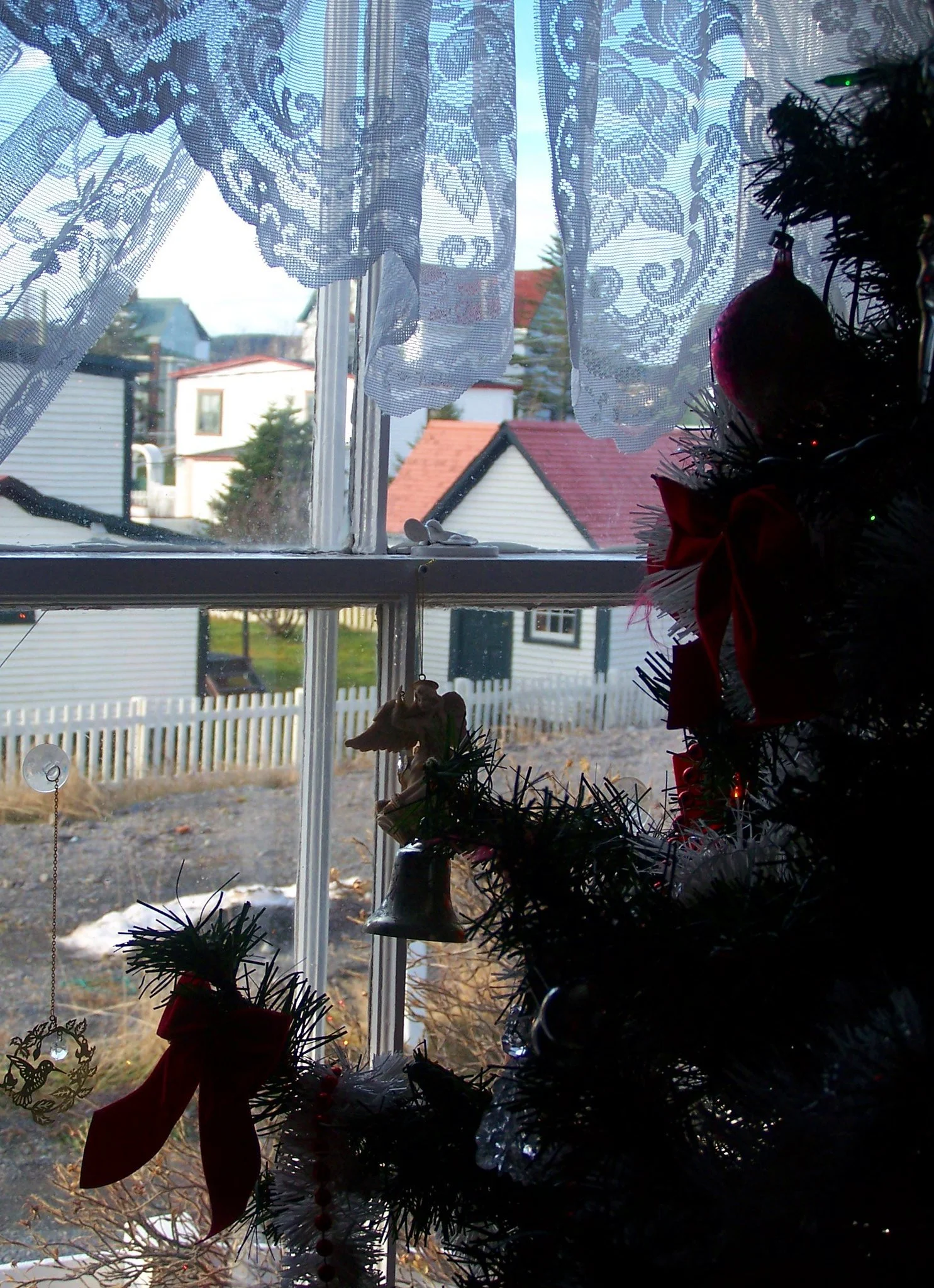
Even now, the roads, ferries, and airports fill with people heading back to familiar kitchens and familiar coves. But in December of 1876, one young man was doing the opposite. Two days before Christmas, he boarded a coastal steamer in St. John’s pointed northward. It would carry him away from everything he knew and toward a brand-new life on the Newfoundland coast.
The young man — we don’t know his name — had just finished his training as a teacher. The posting wasn’t a suggestion. It was an order. Somewhere along the northern coast, a small schoolhouse was waiting for him, along with a modest salary of $150 a year. It would be his first job, likely his first real step into adulthood — and it would begin at Christmas.
It was his first time outside the Narrows, and the sea did him no favours. He was miserably seasick, and as the shoreline of St. John’s faded behind him, a deep unease set in.
Everyone else aboard the steamer seemed to belong to the places they were sailing toward. They spoke easily of home — of mothers and fathers, brothers and sisters, of happy Christmases waiting for them. They were going back to something warm. He was headed into the cold, away from all he had known.
Alone, and likely more than a little frightened, he kept to himself. He listened as the others talked. While they spoke of Christmas joy, he had nothing to offer. He’d had plenty of happy Christmases but they seemed miles away now. He was not in the holiday spirit. He was, as he would later put it, “a melancholy man.”
Then, somewhere along the way, things began to brighten.
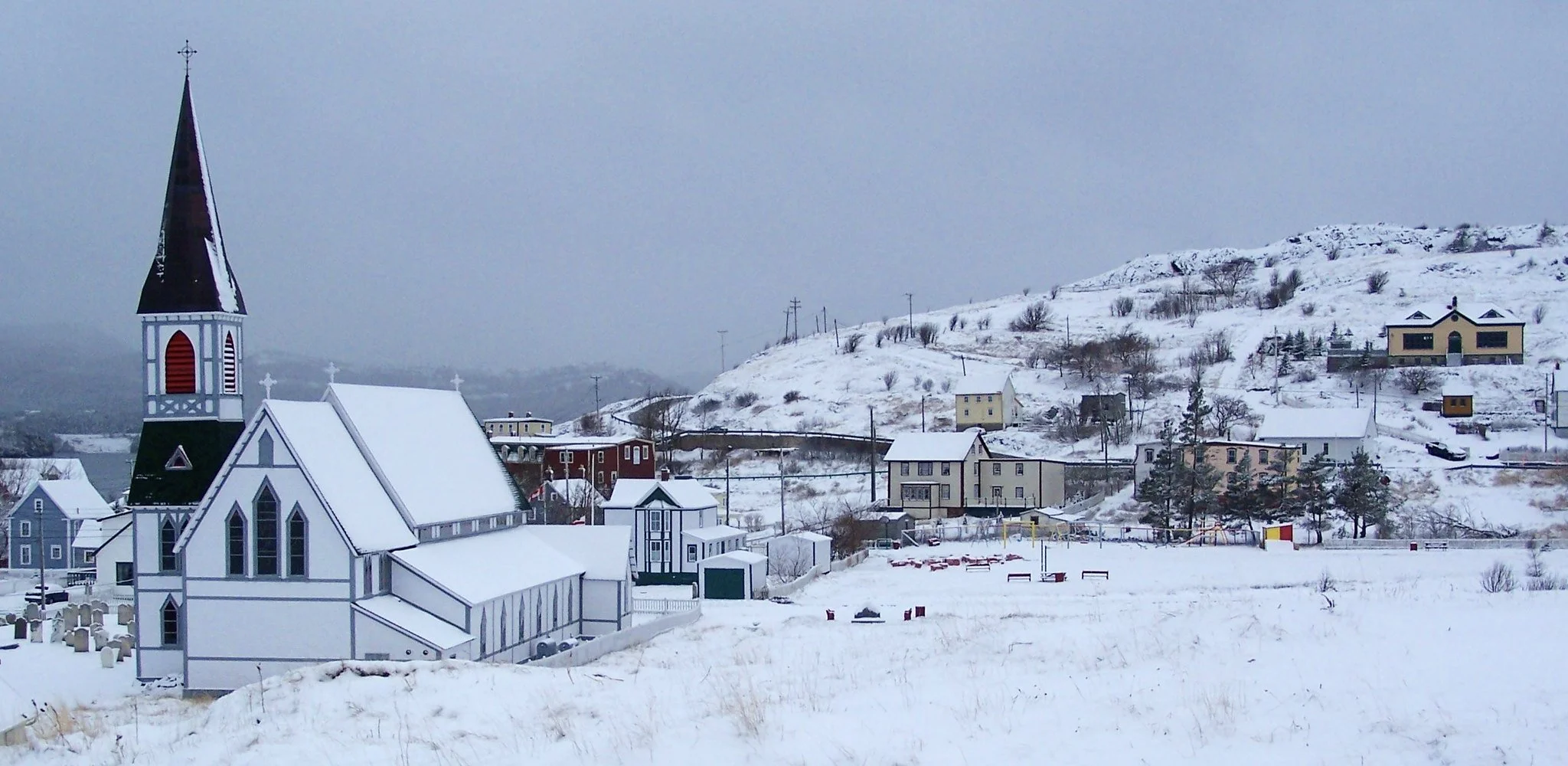
Trinity, Newfoundland and Labrador
In Trinity, another young man came aboard. He carried his own measure of melancholy, having just left his sweetheart on the wharf. The two fell into conversation, as lonely people often do. They shared their disappointment, compared their troubles, and found comfort in the fact that neither was alone.
By the time they parted company for the night, the weight of sadness had shifted and become easier to bear.
As Christmas Eve arrived, the mood aboard the steamer began to change. The already pleasant crowd laughed more easily. The anticipation of home seemed to almost glow from the other passengers. And slowly, almost without his noticing, the season worked its way into the young schoolteacher’s heart as well. By the time they neared Fogo, his gloom had faded, replaced by curiosity and something like excitement.
They entered Fogo Harbour just as the last glow of sunlight was leaving the sky.
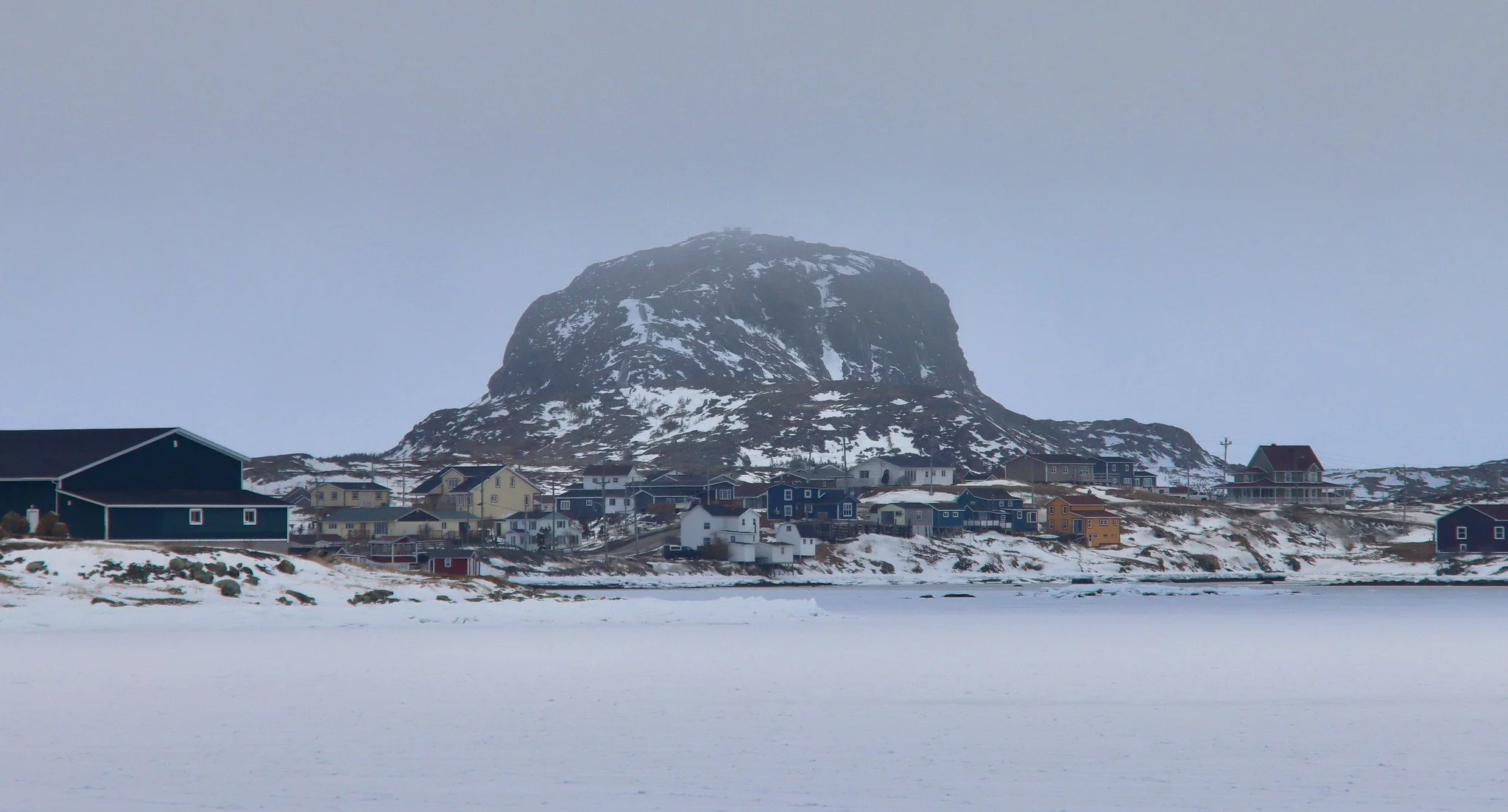
Fogo’s Brimstone Head, Newfoundland and Labrador.
Almost at once, guns cracked from the shore — sharp, celebratory bursts echoed across the water. Bonfires burned on the hills above the harbour, their flames painting the clean canvas of snow a brilliant gold.
And then there were the voices. He could hear happy conversations carrying across the cold water. The voices were as clear as if they were standing right beside him.
Some of the sound seemed to be coming from mummers — men and women in strange costumes moving through the community. He’d heard of the custom, but he’d never experienced it before.
For someone seeing an outport Christmas for the first time, it must have felt like stepping into another world.
The young man from Trinity turned to him and made a suggestion: they should go ashore together. If the new schoolteacher had never seen mummers before, this was the night to do it properly. He had relatives in the place, and if they disguised themselves, they could surprise them the way mummers were meant to.
So they did what mummers have always done.
They masked their faces. Turned their coats inside out. Decorated themselves with whatever bits and pieces they could find. It didn’t have to be perfect. It only had to be convincing.

Once ashore, they slipped easily into the crowd, moving from house to house with the others — knocking, laughing, dancing — taking part in the tradition. At one house, belonging to the Trinity man’s relatives, they were welcomed without question. The mats were rolled up from the kitchen floor, food and drink were brought out, and the space was cleared for dancing.
And there, in that warm kitchen, something changed.
The young schoolteacher later wrote that he threw himself into the evening with a joy he had never known — and never would again. That night, he was no longer a stranger sent north at Christmas. He was just another mummer, laughing, dancing, and belonging.
When the rest of the mummers moved on, the two young men stayed behind. They let their hosts puzzle over who they might be, enjoying the mystery a little longer. When they finally revealed themselves, they were welcomed openly, and the rest of the evening passed easily — talking, laughing, and enjoying the company until it was time to leave.
By eleven o’clock, they were back aboard the steamer.
Somewhere ahead, another port waited. So did a schoolhouse. But the journey had changed. What began in sickness and loneliness had turned into something warm and unexpected — a reminder that Christmas doesn’t always wait for you at home.
Sometimes it finds you.
And all it asks is that you step ashore and join in.
Notes & Thoughts
I’m not sure where fact ends and fiction begins in this story.
I suspect it may have been inspired by Washington Irving’s Old Christmas, in which Irving describes his travels through the English countryside and a visit to the fictional Bracebridge Hall, where older holiday customs are still practiced.
That’s not to say the core of the tale isn’t true. It may be. Or it may simply be an engaging way of recording what an outport Christmas looked like.
The writer, credited only as A Schoolmaster, does set the story at a very specific moment — December 24, 1876 — which may argue in favour of a factual core.
Shotguns & Bonfires
The customs described, at least in broad strokes, align closely with traditional outport Christmas practices. Shotgun blasts fired into the air to mark celebrations, along with Christmas bonfires, are both well documented in Newfoundland communities.
I will point out, the use of shotguns in this way isn’t necessarily something from the distant past.
I have memories of them being used to mark weddings as well. It doesn’t sound especially safe, and in many ways it wasn’t. That said, people who owned firearms generally knew how to handle them and how to discharge them without causing harm. I don’t have statistics on injuries resulting from the practice, but my suspicion is that incidents were relatively rare — perhaps no more common than injuries caused by fireworks, which serve as an obvious contemporary parallel.
Never Seen Mummers
I was struck by the description of mummering taking place on Christmas Eve. Today, we tend to think of mummering as something that happens after Christmas Day. Perhaps that wasn’t true everywhere. Or perhaps this was an invention of the writer. I don’t know.
It’s also worth noting that 1876 was fourteen years after the government had formally prohibited mummering — at least in larger population centres — which may help explain why the young schoolmaster had never seen it before.
The act stated:
Any person who shall be found at any season of the year, in any town or settlement in this Colony, dressed as a mummer, masked or otherwise disguised, shall be deemed to be guilty of a public nuisance, and may be arrested by any peace officer, with or without a warrant.
In practice, the law was enforced unevenly and had little effect in many outports, where the custom continued. If the schoolmaster’s account is true, it certainly suggests there was no serious prohibition on mummering in Fogo at the time.
-
Old Christmas, Washington Irving, Project Gutenberg
The Many Mummers of Newfoundland, Product of Newfoundland






Stranded on a barren island just after Christmas, two men built a boat from scraps, rusty nails, and ice—then trusted it with their lives.