John Vincent: The Fisherman Who Painted The Pope
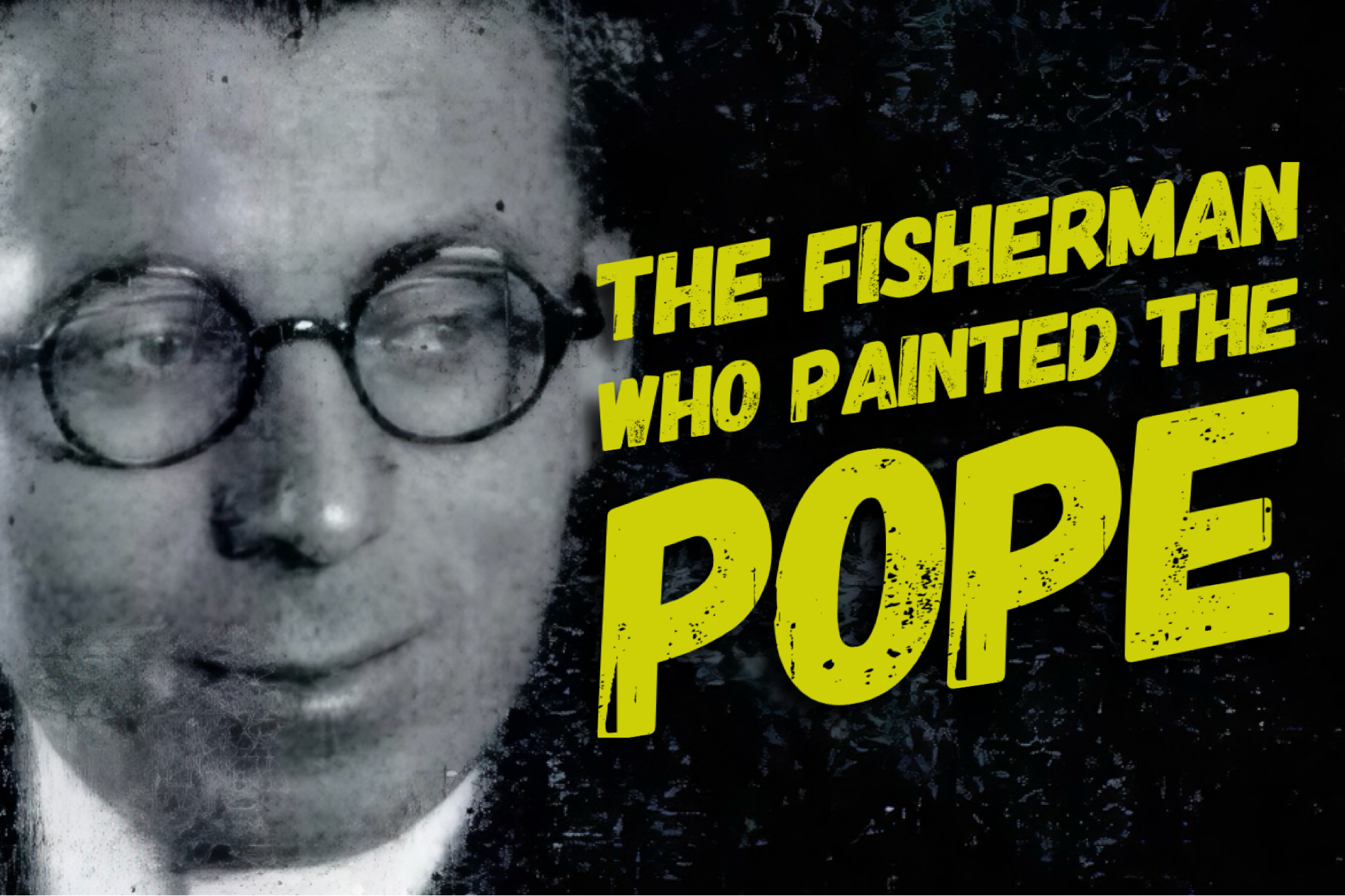
In the early 20th century it must have seemed like an awfully long way from the shores of Bonavista Bay North to the art studios of Florence but one young man, John Vincent, found a way to make it happen… and it wasn’t long he became famous as ‘the fisherman who painted the pope’.
The Story of John Vincent
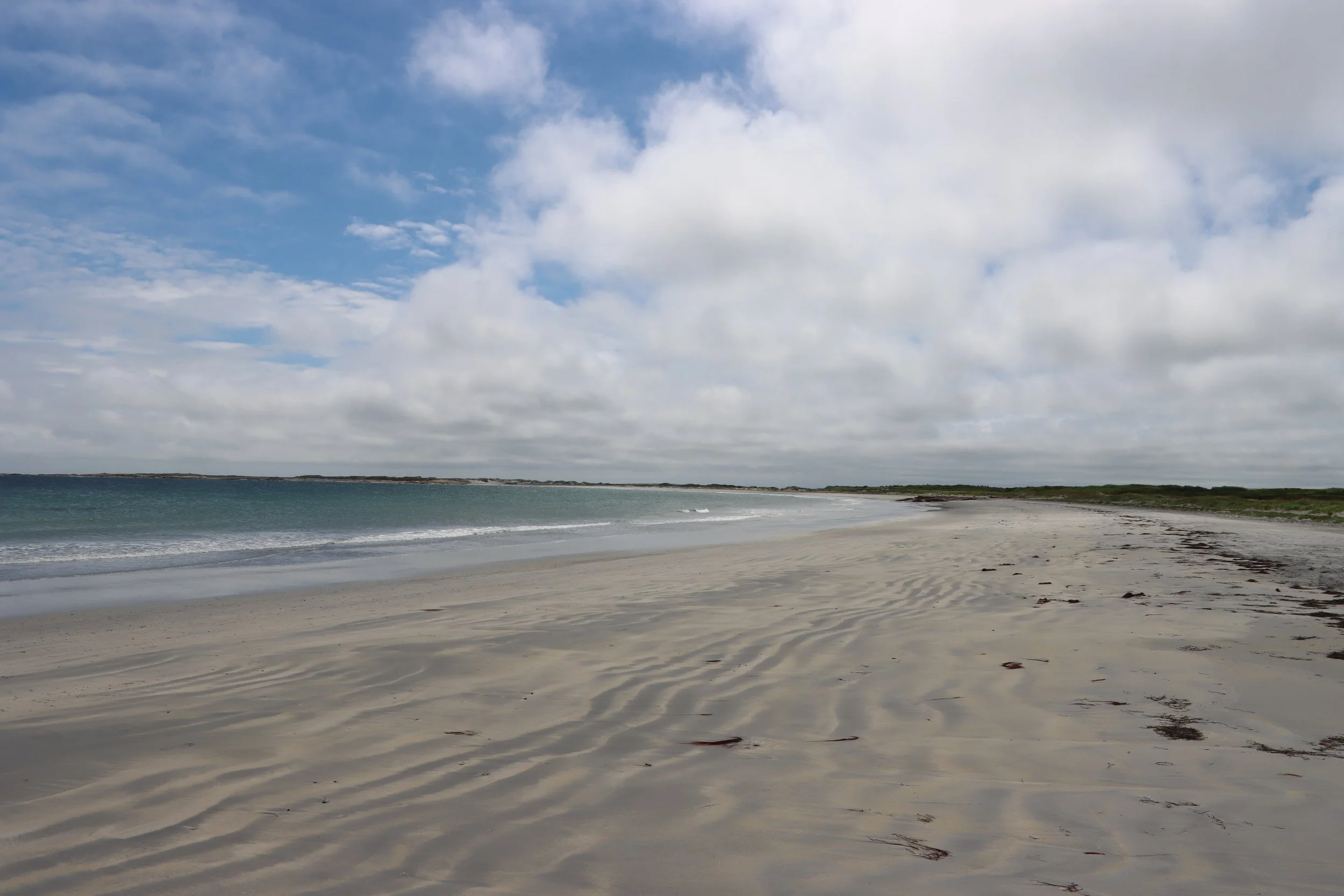
A view of Cape Island, NL
John Vincent grew up on the northern edge of Bonavista Bay. He was born in 1885 in the tiny settlement of Cape Island, a now-abandoned community not far from the sandy beaches of Cape Freels.
By the time he was 7, the Vincent family relocated to nearby Wesleyville.
John’s early life wasn’t so different from that of other boys in town and, by the time he was 12, he was fishing for cod on the Labrador but he didn’t want to stay a fisherman.
Vincent had an aptitude for art, frequently drawing sketches of people in the community. It was a skill noticed by his teacher who began giving him art lessons. It wasn’t long before Vincent decided to turn his passion for drawing into a career.
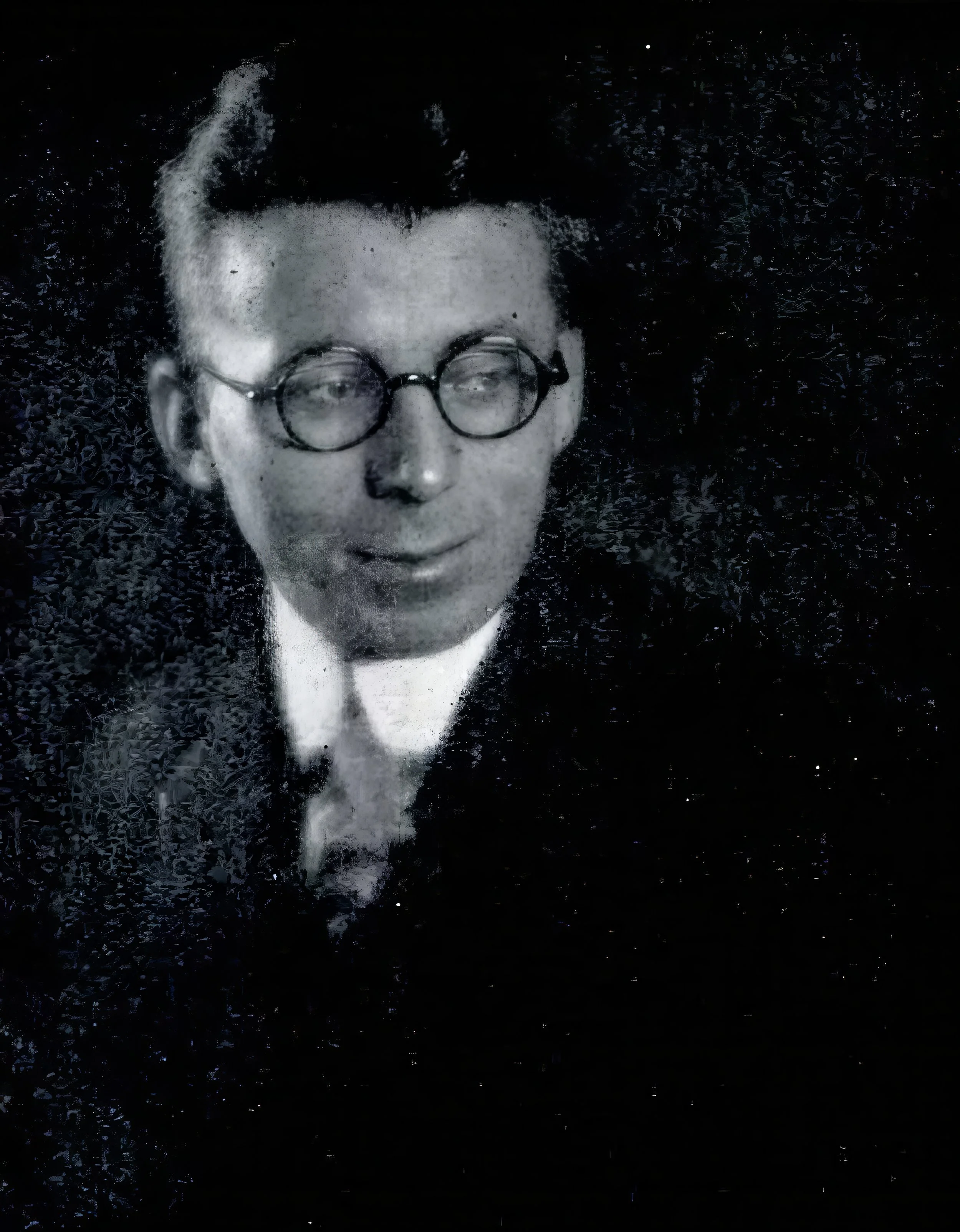
John Vincent, Pencil Points, 1922
With the support of his parents he was able to set aside some of his earnings to pursue training in art. He began by enrolling in a correspondence course on architecture. He went on to design several homes in Wesleyville.
When he was 17, he left Newfoundland to study architecture at Boston Technical College. While there he painted scenes of Newfoundland, which he sold to further finance his education.
Eventually Vincent made his way to Europe where he studied the architecture. While there he produced a lithograph of the Milan Cathedral which he was able to sell.
Those around him recognized, not only his talent, but his devotion to his craft. Vincent was renowned as a hard worker, often beginning at 5 in the morning and working long into the evening.
His dedication soon paid off.
Getting Noticed
“[Vincent’s fishing scenes are] doubly interesting, for they represent a characteristic phase of the life of Mr. Vincent’s native Newfoundland, in addition to being good examples of technique. The spirit of the scene has been caught and admirably revealed.”
After returning to America, John Vincent’s work fell into some influential hands. In 1919 his portfolio earned him a multi-page spread in New York’s Architectural Review.
The magazine contained reproductions of his watercolours, lithographs, and sketches including some images of Newfoundland.
The article was glowing, especially concerning his pictures of Newfoundland. “The spirit of the scene has been caught and admirably revealed,” they wrote.
Pencil Points, an American magazine on architecture, design, and drafting published several of his architectural drawings and even used a portion of his drawing of the Buenos Aires Branch of the First National Bank of Boston on the cover of its January 1922 issue. (For more of his architectural drawings, see ‘Sources and Further Information,’ below.)
Vincent’s precision and attention to detail were remarkable.
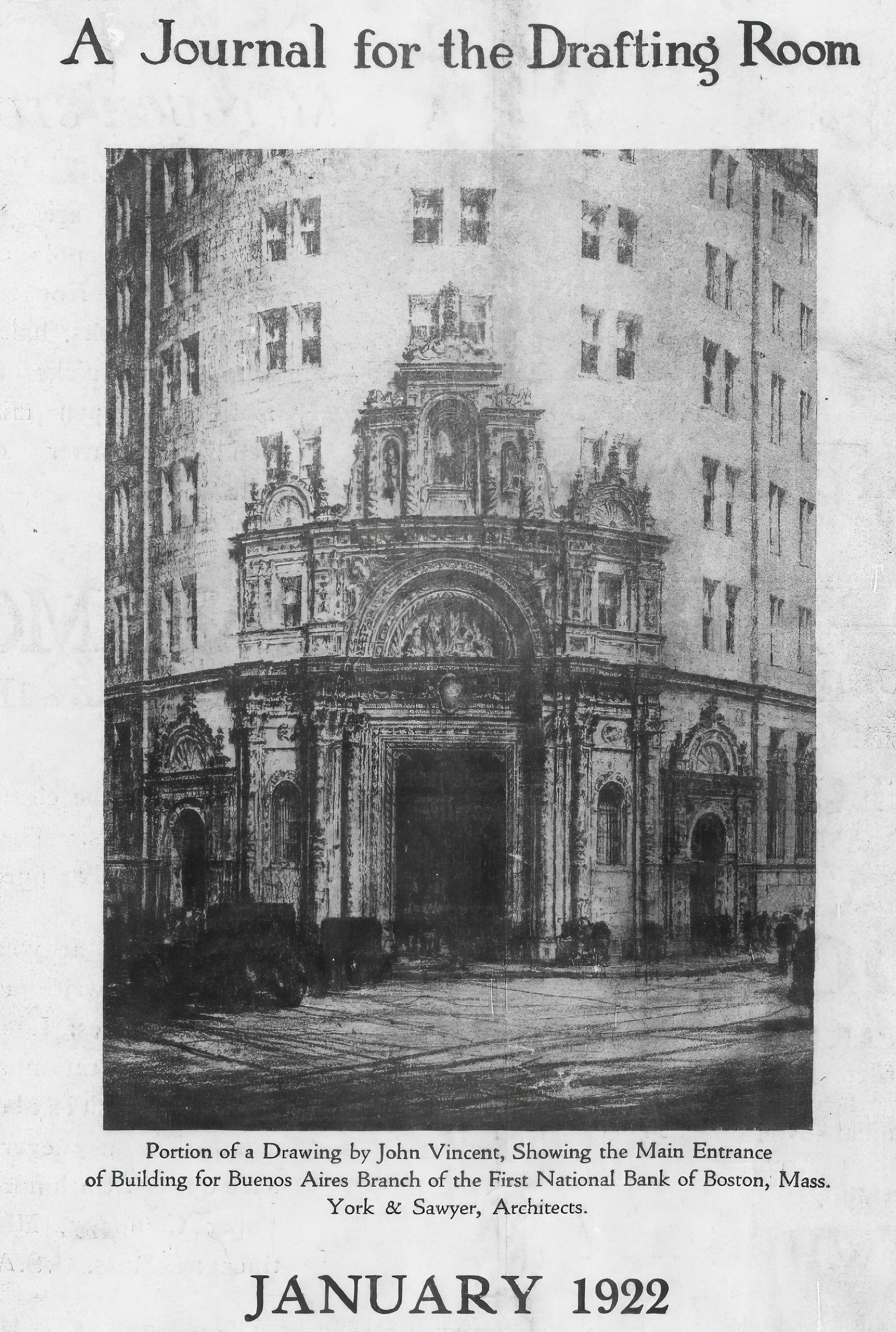
Cover of Pencil Points, January 1922, featuring a drawing by John Vincent.
Portrait Painting
Always interested in developing his talent, John Vincent decided he want to try oil painting. “I went to a dealer in art materials on Six Avenue, New York and bought every color in the store, some brushes, canvas, linseed oil and other paraphernalia,” he said.
He decided to begin by painting a landscape, so he headed out of the city to the countryside.
”After dabbing around with my colours for about a fortnight,” he said, “I returned to New York, opened a studio and started seriously as a painter of portraits in oils.”
He quickly gained some notoriety.
The November 1922 edition of the Methodist Monthly Greeting, contained an article on Vincent.
Under the banner ‘Newfoundland’s World-Famed Artist,’ Robert H. Mercer chronicled Vincent’s career, including a portrait titled “An Old Lady Folding Her Hands,” which Vincent discussed in some detail:
"This painting is made in oil, the color of which is a symphony of golden browns. It has created quite a sensation and was bought about four months ago for the permanent exhibition of the Metropolitan Museum, which is the greatest honour an artist can achieve in this country.”
I assume he is referring to the New York Metropolitan Museum of Art. They have an extensive online archive of their works but, in 2026, I was unable to find any painting by that title, or anything credited to John Vincent in their holdings.
Later in the same article, Vincent says:
"I have been advised by the greatest art critics in the land to go to Italy and paint and study. So I am leaving here on the 24th of May. I will settle in Florence and there I will study, and will be influenced by the work of the great masters from the twelfth century down through that wonderful period of the 16th and 17th centuries, when the greatest Italian Masters lived."
It was there he created the image for which he is best remembered.
Painting Pope Pius XI
After spending some time in Spain and Rome, John Vincent set up a studio in Florence. It was there he came across a photo of Pope Pius XI. He decided he would use it as the basis for a painting. He didn’t intend that it should be a serious piece of work, but things took an unexpected turn.
As the story goes, one day Count della Sora of Florence visited Vincent’s studio and saw his work on the portrait of the pope. He was impressed; so impressed that he insisted that the canvas be shown to Count Mistrangelo — the Archbishop of Florence, and close friend of the pope.
One thing led to the next and, according to the lore, John Vincent found himself in Rome with the pope. One news report says Vincent was selected from 11 world renown painters. He was reportedly granted sittings with the pope during which he made several sketches, from which he produced a life-sized canvas.
The image is described in American Art News as featuring Pius XI seated at an ornate desk containing papers. The background hints at Vincent’s interest in architecture, they say, as it contains a detailed colonnade.
Reportedly the painting of the pope led Vincent to rub shoulders with some artistic heavyweights, including John Singer Sargent. Sargent had studio space in Florence and Vincent spent some time studying with him. Vincent is credited with having painted one of the few portraits of Sargent painted from life.
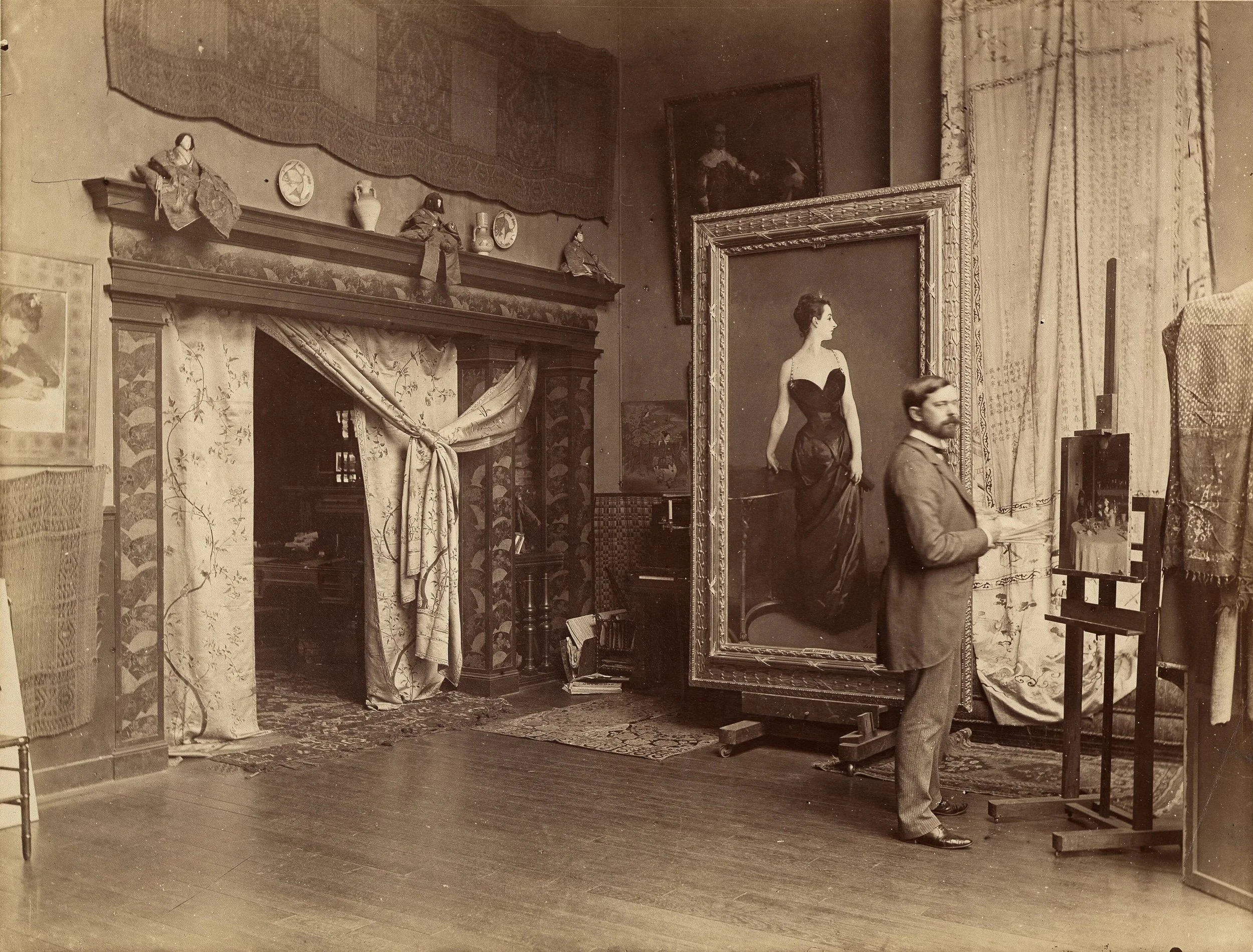
John Singer Sargent with Portrait of Madame X, c. 1885, Adolphe Giraudon, Public domain, via Wikimedia Commons
Where is The Portrait of Pius XI Today?
So what happened to the portrait of Pope Pius the XI?
I don’t know.
Some articles suggest it is Florence. It may be in a private collection. At the time of painting, there were plans to exhibit it in New York, ‘if it were not requested in Rome’.
I am unable to find an image of the portrait. If someone can direct me toward one, I’d be grateful.
Truthfully, it is difficult to find any images of Vincent’s portraiture online. I tracked down one possible John Vincent portrait (of W. G. Gooderham).
I can’t verify that it is ‘the’ John Vincent, but I think it’s possible.
In any case many Newfoundlanders have probably already seen his work.
In addition to painting a pope, John Vincent painted portraits of kings… and maybe left his mark on the St. John’s skyline.
John Vincent & The King
During his career John Vincent painted a portraits of King George V and King George VI. The latter became quite famous in Newfoundland. The Daily News described the portrait of George VI as follows:
Mr. Vincent's portrait of His Majesty is a superbly beautiful piece of work, and is mounted in an Italian Renaissance antique frame luckily secured by the artist himself in Italy on his last visit there. Mr. Vincent kept this magnificent frame especially for something extraordinary in the way of a portrait, and when he conceived the idea of doing this special portrait of His Majesty he realized, that the special occasion had come. He paid $500 for the frame, which is at least 400 years old.
Mr. Vincent's portrait of the King, which measured six feet in height and three feet in width and shows the monarch in the uniform of a colonel of Hussars, his right hand resting on his helmet, which itself lies upon "The Life of Wellington”
Locals were so impressed with Vincent’s portrait, that a campaign was undertaken to bring the canvas to the province.
To raise money, prints of the painting were made and sold to raise funds for its purchase. While the campaign was undertaken nearly a century ago, I’d imagine there are still be copies of the picture in the province.
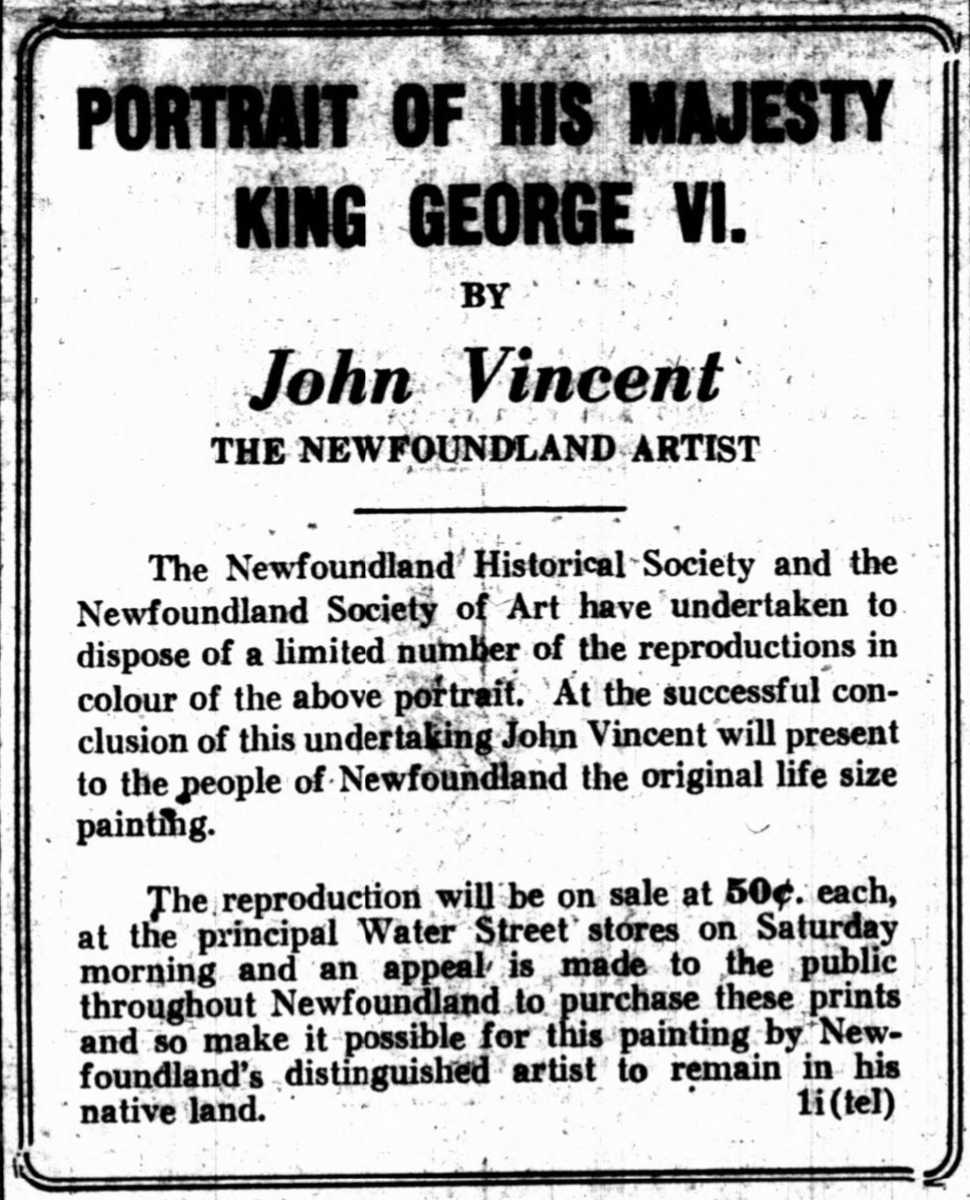
The campaign must not have been successful as, in 1949, Vincent offered the painting to Newfoundland as a gift.
It has been on display in several locations, including Government House.
I’m not sure if it is still there today.
Cochrane Street
John Vincent apparently had a hand in designing the former Cochrane Street United Church.
Cassie Brown wrote the following in Observer’s Weekly (1962):
While John Vincent kept painting his boats and selling them he was becoming famous in North America for his architectural building designs. In 1912 he brought his family back to Newfoundland on a visit.
While here he discovered that seven established architects had been paid $1,000,00 each to submit a design for the new Cochrane Street church which had burnt down a year or so previous. By the time John had heard of it, the drawings had been submitted and were under study by the committee.
But John wanted to design that church, and he suggested to the committee that if they permitted him to submit a design, he would do it for free.
If his design wasn't acceptable, he alone would be the loser. On that condition he entered the competition. and won.
However, he was at this time absolutely beside himself for more knowledge in art, and could not remain in Newfoundland to see the church under construction. He went back to college, and did not see the finished product of his pen until his visit to Newfoundland this October. He did say his original design had been in Gothic, but owing to the tremendous cost of Gothic design the church was finished in Italian Lombardo.
I have a few questions about this account.
As I understand it, the fire that at the original Cochrane Street Church happened on January 18, 1914 — two years after Vincent supposedly submitted designs for its replacement. The Encyclopedia of Newfoundland says an R. H. Vincent submitted a plan which was too expensive and subsequently modified.
I’m not sure where the truth lies, and neither was Cassie Brown evidently.
David Blackwood and Cassie Brown
In 1992 Newfoundland-born printmaker David Blackwood spoke at the Convocation at Sir Wilfred Grenfell College in Corner Brook and said:
“The idea of painting was not entirely unknown in the region. That extraordinary man from Cape Freels, John Vincent, was a household name. He was reputed to have painted the portraits of Pope Pius and King George VI. The late Cassie Brown said to me, "My dear, it's all a myth." But during a visit to Government House in St. John's there it was, John Vincent's full-length portrait of King George VI.”
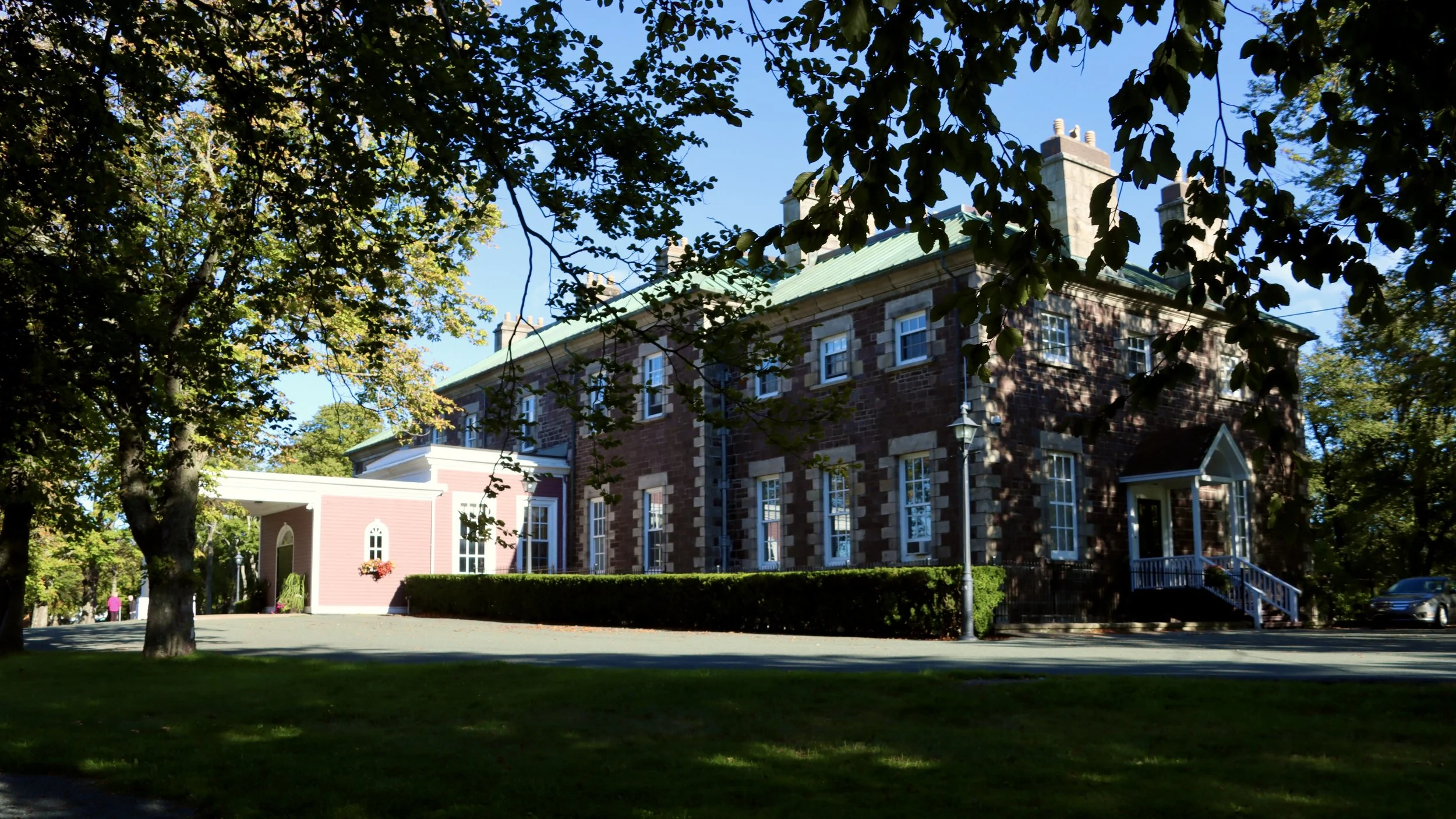
Government House, St. John’s, NL
Clearly Blackwood is suggesting that Brown — who wrote her profile of the man in 1962 — did not believe all that was said about Vincent and his accomplishments. I don’t know what her doubts were, but if you read that nearly full-page profile you’ll notice she spares only two sentences to address his most famous works, saying only:
“[H]e was chosen from eleven other world renowned painters to do the portrait of Pope Pius XI. He also painted the portraits of King George V and George VI.”
I think Brown would have believed these canvases existed; she probably had seen the portrait of George VI. Whatever doubts she had, perhaps they had more to do with how the canvases came to be.
If that’s the case, I completely understand.
Myth-making and Confusion
Much of the local coverage of Vincent’s career appears as much interested in mythologizing the man and his work, as reporting on it. Writers seemed determined to hammer home the story of the local lad who made good. So determined, the articles overflow with superlatives. I don’t know how it read a century ago, but it does not engender trust these days.
On top of that, the story of Vincent’s portrait of the Pope does not always seem consistent. Sometimes their meeting was supposedly brokered by Count della Sora of Florence, and sometimes he is described a having been selected from 11 finalists. Perhaps both versions are somehow true. Adding to that, the number of sittings Vincent supposedly had with the pope seems to vary by account — some say as few as two, others as many as fourteen.
Taken together, I understand why someone might begin to wonder where the truth ends and the myth-making begins.
What We Know For Sure
There may be doubt about some of the details of John Vincent’s life and work, but what is absolutely clear is that John Vincent was talented artist, who earned respect at home, in New York and across Europe. He made moving sketches of life in Newfoundland, created impressively detailed architectural drawings, and made a career as an in-demand portrait artist.
He was much more than ‘the fisherman who painted the pope’.
It is hard to track down his work these days but the few images available online are as impressive today, as they were when he made them. It’s too bad there aren’t more of them but, sadly, John Vincent’s career was cut short.
After he left Europe, he returned to the United States, settled in Lock Haven, Pennsylvania and continued to paint portraits. In the 1940s he developed health problems, and eventually experienced paralysis.
He died in 1965.
-
The Romance of Old Fishing Boats, Art & Decoration, September, 1921
Architectural Review, 1919
Evening Telegram, 1919
John Vincent Paints Portrait of Pius XI, American Art News, 1922
Newfoundland Quarterly, 1923
Newfoundland Weekly, 1924
Newfoundland Weekly, 1926
John Vincent, Encyclopedia of Newfoundland and Labrador
Daily News, 1961
Western Star, 1942
NL Hansard (pg 515), Portrait Donation, 1949
David Blackwood speech in the MUN Gazette, 1992
John Vincent Will Receive $65,000, NY Times, January 7, 1926
John Vincent From Fisherman to Painter, Observer’s Weekly, January 6, 1962
Nfld. Will Buy Vincent's Portrait, Grand Falls Advertiser, June 10, 1939
John Vincent, Pencil Points, February 1922
Cover drawing, Pencil Points, January 1922
Cover drawing, Pencil Points, April 1922
Hotel Statler, Pencil Points, April 1926
Did You Know That —, Art Digest, April 1935
Newfoundlanders Winning Fame, The New Newfoundland, 1931
Art in Newfoundland, The Book of Newfoundland
Cochrane Street United Church, Encyclopedia of Newfoundland and Labrador
An Amazing Story About John Vincent, The Barrelman, July 1939