The Story of Jiggs’ Dinner: Newfoundland’s Traditional Boiled Meal
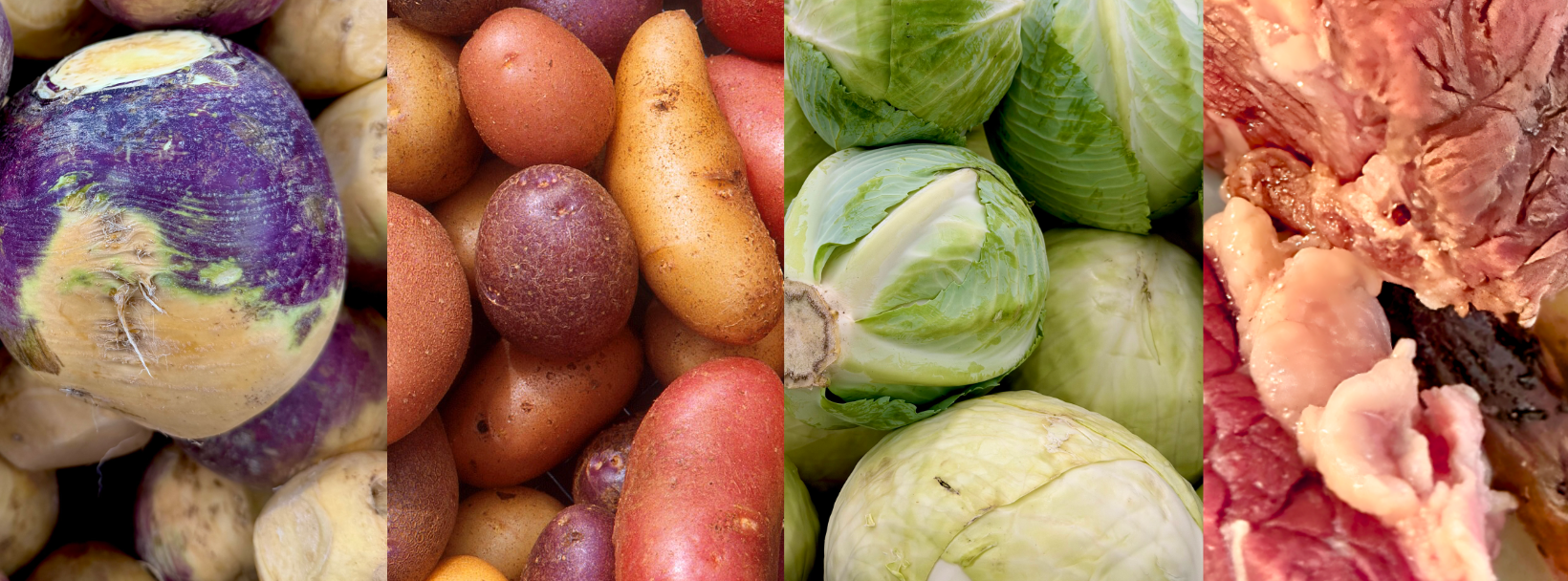
Turnip, potatoes, cabbage and salt meat (beef)
There are few meals that feel as authentically ‘Newfoundland’ as Jiggs’ dinner. It’s been on tables here for generations and, despite warnings from dieticians, it’s probably not going anywhere soon. It’s beloved.
The funny thing is, despite its cultural importance there’s nothing particularly local about it.
Not the ‘recipe’. Not even the name.
What Is Jiggs’ Dinner?
Jiggs’ dinner is a one-pot meal of salt beef and vegetables — usually potatoes, cabbage, carrots, and turnip. Depending on preference and availability it might also include onions, parsnips and turnip greens. All ingredients are boiled together in a single pot, often alongside a bag of pease pudding.
Salt beef (aka salt meat) is, perhaps, the key ingredient. It is the chief protein and provides flavour and seasoning to the vegetables.
People can be a bit persnickety when it comes to Jiggs’ dinner. Everyone seems to have firm ideas about what counts — and what doesn’t. Purists will tell you that the moment you add anything extra — roast beef, chicken, turkey, even gravy — it stops being Jiggs’ dinner altogether. At that point, they’d probably prefer to call it a “cooked dinner” or maybe, depending on the calendar, “Sunday dinner.”
A Taste Of Tough Times
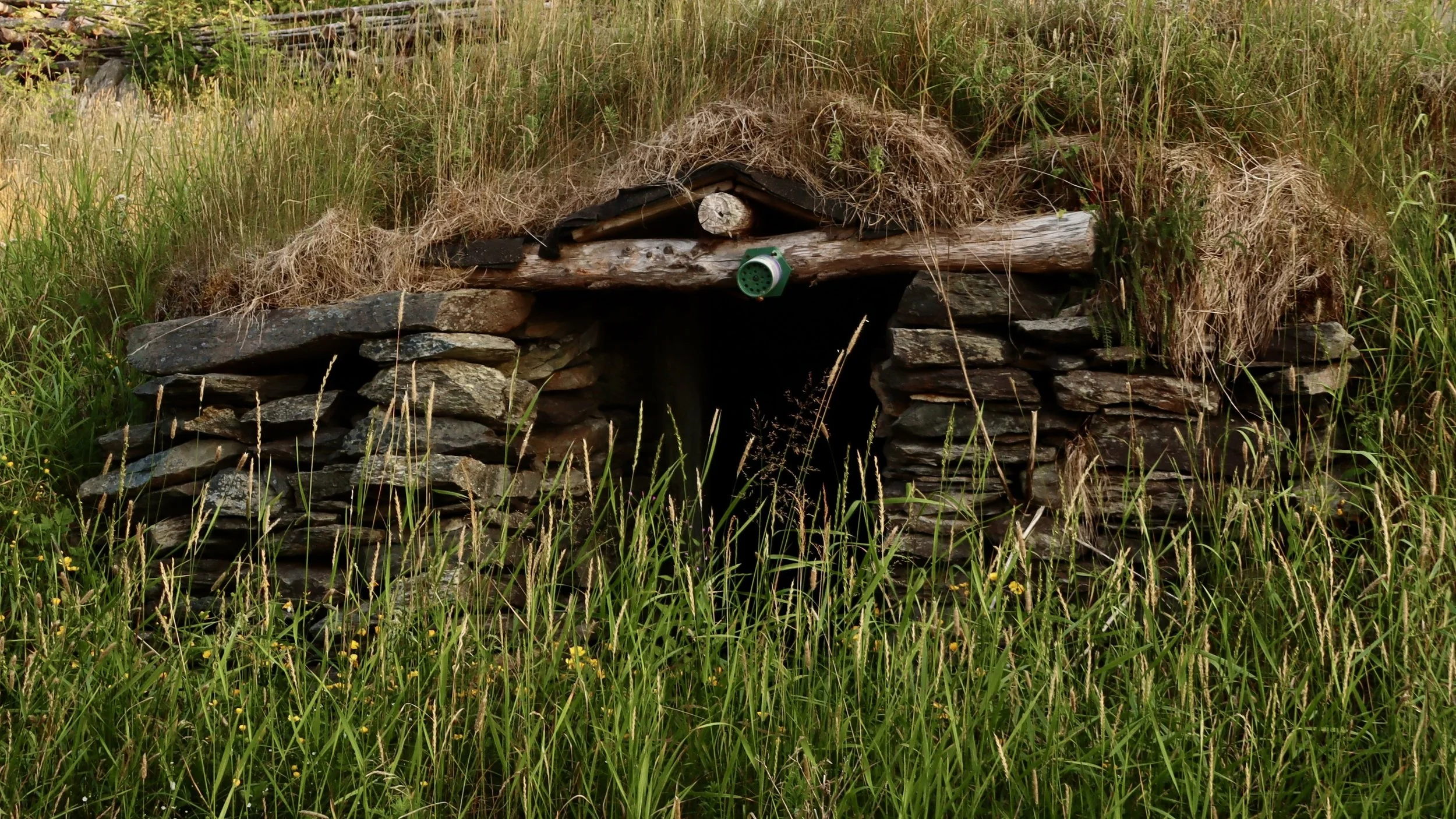
Root Cellar, Winterton, NL
Jiggs’ dinner is often considered a treat these days but it wasn’t always. It was once a meal of convenience.
Not so long ago, food security was a much bigger concern in Newfoundland than it is today. Winters were long and isolating. It was impossible to ship food to many tiny settlements.
Many families kept vegetable gardens and grew much of what they needed themselves, favouring hardy crops like potatoes, carrots, turnips, and cabbage— things that would last through the winter. To keep them, they relied on root cellars — structures built into the earth that held a steady temperature and humidity, preventing the vegetables from freezing.
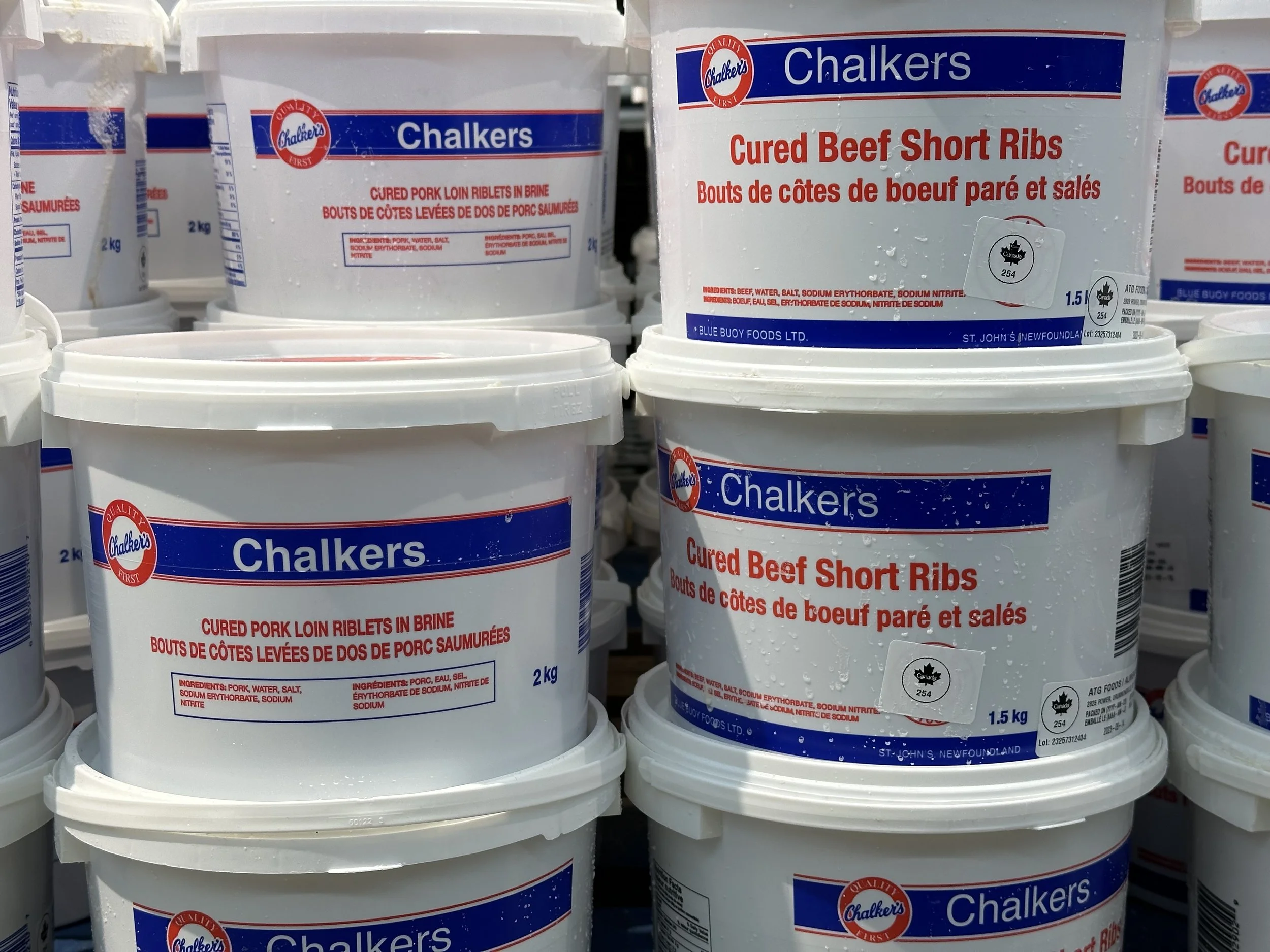
Stacks of salt pork and salt beef buckets.
Fresh meats were rare, too.
Instead, families relied on salt-preserved beef, stored in brine and able to last for months. This was sometimes called corned beef — “corned” referring to the coarse grains of salt used in the curing process. Even after refrigeration became common salt beef held on, largely for its taste.
Over time, a distinction emerged. What we now think of as corned beef and Newfoundland salt beef aren’t quite the same thing, though the terms were once used almost interchangeably. Modern Newfoundland salt beef is heavily brined, quite fatty, and distinctly pink — even after it’s been cooked.
Check out this salt pork experiment from Historic Royal Palaces.
Root cellar vegetables and salt meat were the food that could be depended upon through the winter, and they became the backbone of Jiggs’ dinner. People cooked with what they had — what would keep — and turned it into something filling and reliable.
And it wasn’t just happening in Newfoundland.
Boiled Beef
Across the northeast United States, people were eating a nearly identical meal known as New England Boiled Dinner — corned beef with cabbage, potatoes, and other root vegetables.
At the same time, Irish Americans had their own version in corned beef and cabbage, while in England, boiled beef — often brined and served with potatoes and carrots — was a staple among the working classes. All of them are clear culinary cousins of what we now call a Newfoundland-style Jiggs’ dinner.
For a bit of fun, check out the song Boiled Beef and Carrots by Harry Champion. Written in 1909, it’s a whimsical tribute to the humble, hearty meal:
Why Call It Jiggs’ Dinner?
Jig is a weirdly important word in Newfoundland and Labrador; not only does it describe a meal, it is the word for a traditional style of dance and a method of fishing.
It would be easy to believe either of these activities might, somehow, have loaned their name to the meal but that isn’t the case.
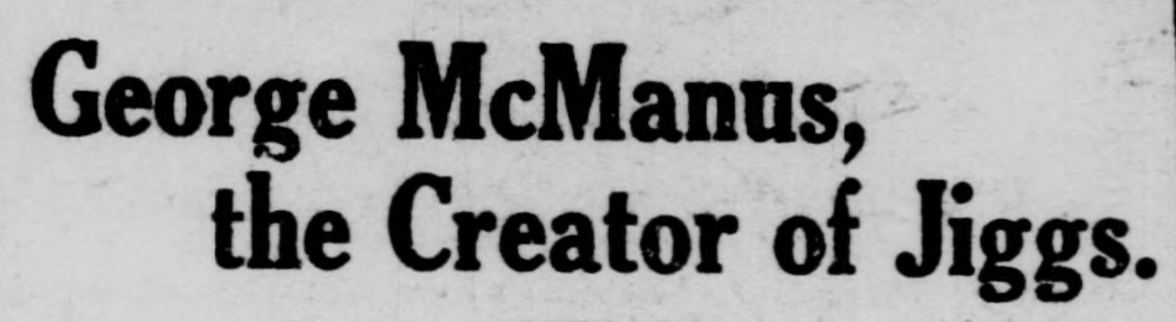
Headline, Evening Telegram, Dec 16, 1919
The term Jiggs’ Dinner was inspired by the American comicstrip Bringing Up Father by George McManus. The strip began in 1913 and was a wildly successful in the early part of the 20th century. It told the story of Jiggs and Maggie — Irish immigrants to the US who won money in the lottery. Humour came from the friction between Maggie’s desire to embrace the social status that came with their new-found wealth and Jiggs desire to maintain his connections to his humble roots.
One of Jiggs favourite things was to sneak away to Dinty Moore’s Tavern for his favourite meal — corned beef and cabbage.
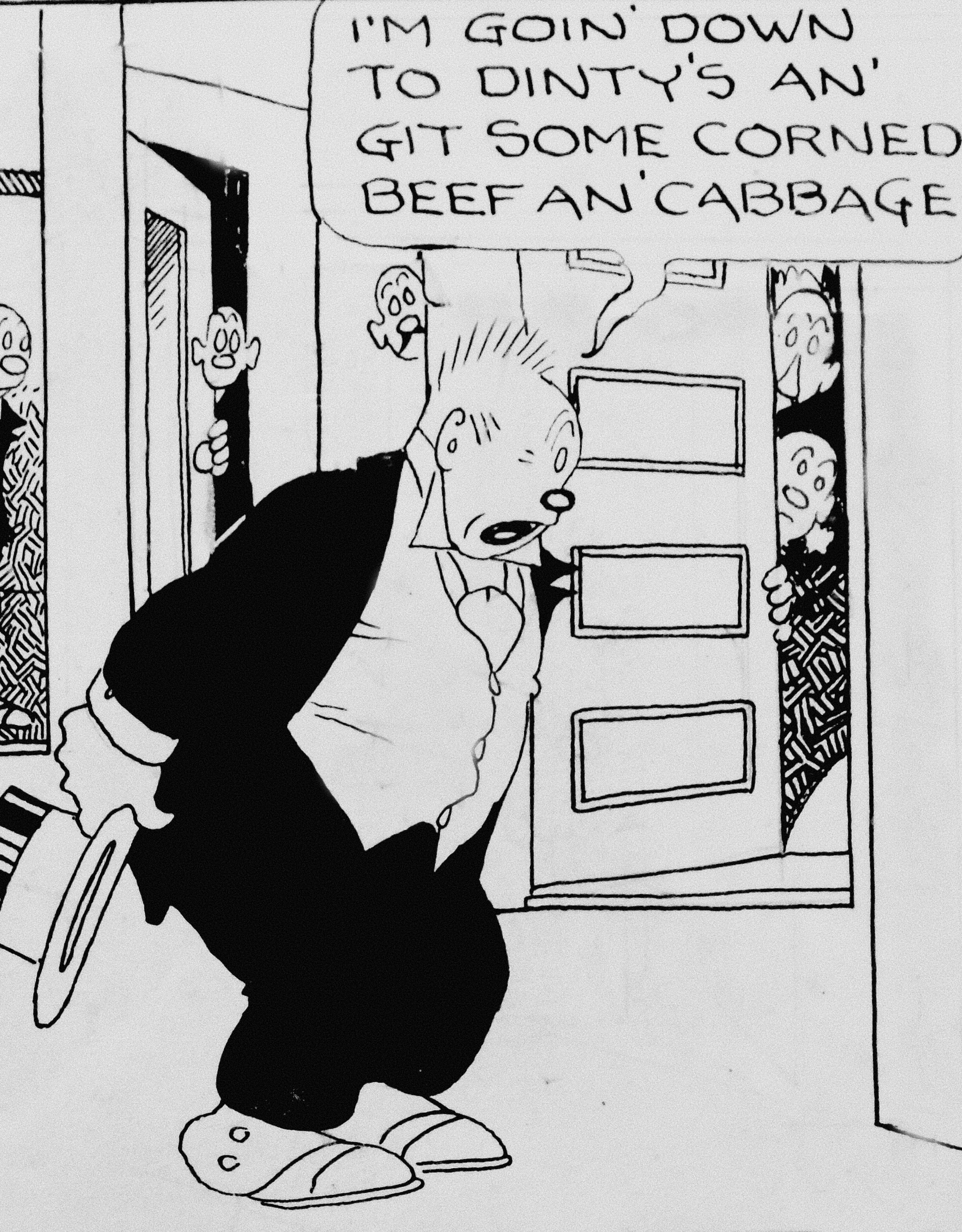
Jiggs, corned beef and cabbage from Bringing Up Father, George McManus
Bringing Up Father was so popular it wasn’t long before people began referring to a meal of corned beef and cabbage as Jiggs’ dinner.
The following clip came from the Evening Telegram (St. John’s, NL) in November 1922, and while it doesn’t specifically use the phrase Jiggs’ Dinner, it illustrates the growing influence of the comicstrip.
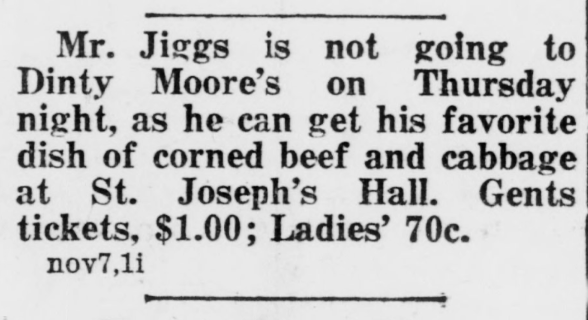
Ad appearing in the November 7, 1922 edition of the Evening Telegram, St. John’s, NL
Five years later, in 1927 a piece in the Western Star (Corner Brook) about a dinner in Port aux Basque, illustrates that the phrase Jiggs’ dinner had entered the local lexicon (and does so while also mentioning Maggie of Bringing Up Father).
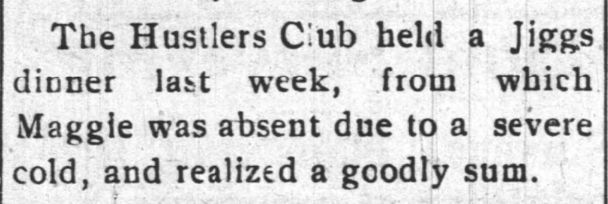
Excerpt from The Western Star, April 13, 1927
It wasn’t just happening in Newfoundland, Jiggs’ dinner was being served all across the continent. The following is a mention of Jiggs dinner that appeared in British Columbia’s Cranbrook Herald in 1924:
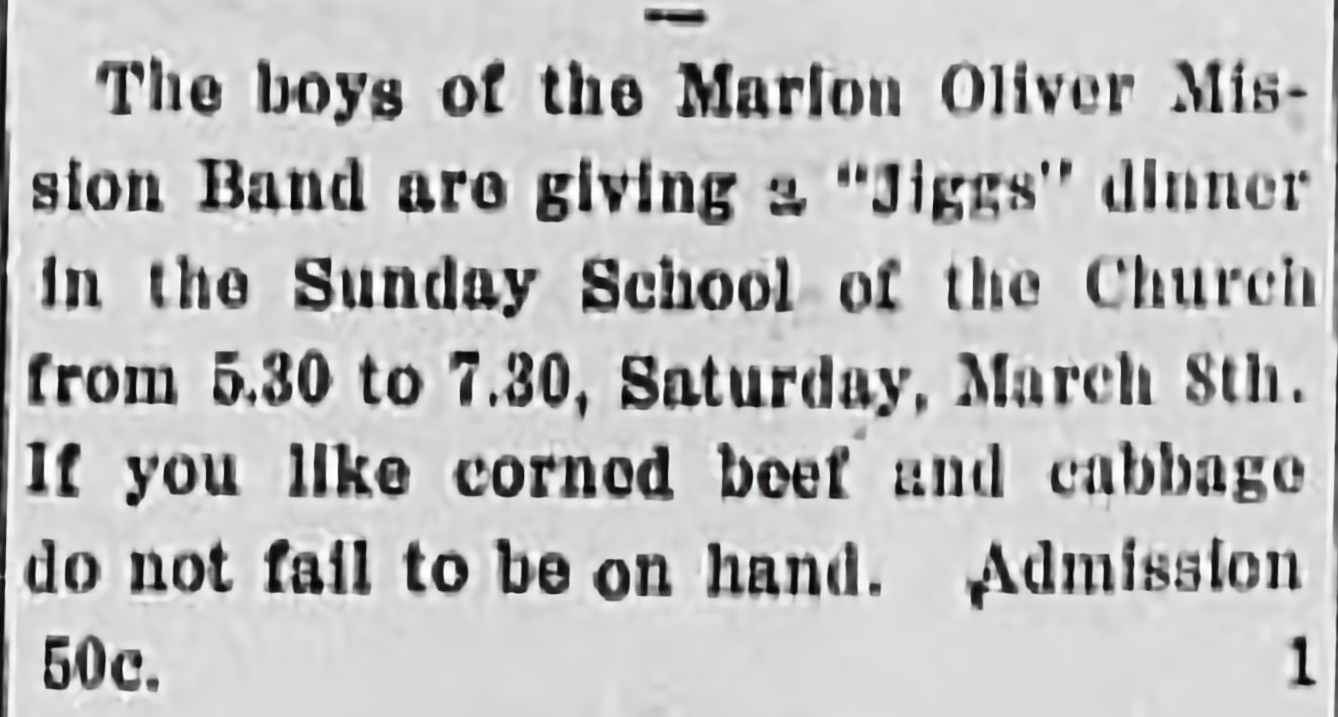
Excerpt from the Cranbrook Herald, Feb 29, 1924
These days the phrase “Jiggs’ dinner” has largely, but not totally, fallen out of use outside of the province. In Newfoundland and Labrador having “a feed of Jiggs’” remains as popular as ever.
Maybe the name stuck because people here gave it meanings of their own, tying it to familiar ideas of a “jig.” Things like suggesting the name came about because the act of lifting vegetables from the pot resembles jigging for cod; or the name was the result of “scuffing and scoffing” — the idea that salt beef and cabbage was once served at dances. Sort of jigs and Jiggs, I guess.
I don’t know.
Authentically Newfoundland and Labrador
Despite the fact that the name came from an American comic strip, and versions of the meal exist on both sides of the Atlantic, Jiggs’ dinner is about as “authentically Newfoundland” as it gets.
The meal has a history here, and for many it’s still part of life — week in, week out. From the Saturday night peeling of vegetables to the Sunday dinner plate, it lives on in this place. It’s not just in history books, it’s still carried forward in kitchens to this day.
Jiggs’ dinner isn’t important because it began in Newfoundland. It’s important because we kept it — because we made it part of our story, and kept telling it, one meal at a time.
-
The Traditional Newfoundland Kitchen, Roger Pickavance, Boulder Publications
Jiggs’ Dinner for Beginners, NL Tourism
Mr. Jiggs, Evening Telegram, November 7, 1922
The History of the Iconic Jiggs Dinner, Canadian Food Focus
A traditional Jiggs dinner, Toledo Blade, March 9, 2010
Food News; Myth About Corned Beef Is Revived, NY Times, March 16, 1959
An Investigation of Jigg’s Dinner, Niki George, Culture & Tradition, vol 21 (1999)
Jigg's dinner good for taste buds, bad for health, Gander Beacon, May 16, 1990
A Thanksgiving Service, Daily News, October 22, 1934
George McManus, Creator of Jiggs, Evening Telegram, Dec 16, 1919
Jiggs Dinner, Parks Canada