In October 1794 a shortage of sailors aboard a naval ship in St. John’s harbour set off a chain of events leading to the gallows… and a grisly post-mortem punishment.
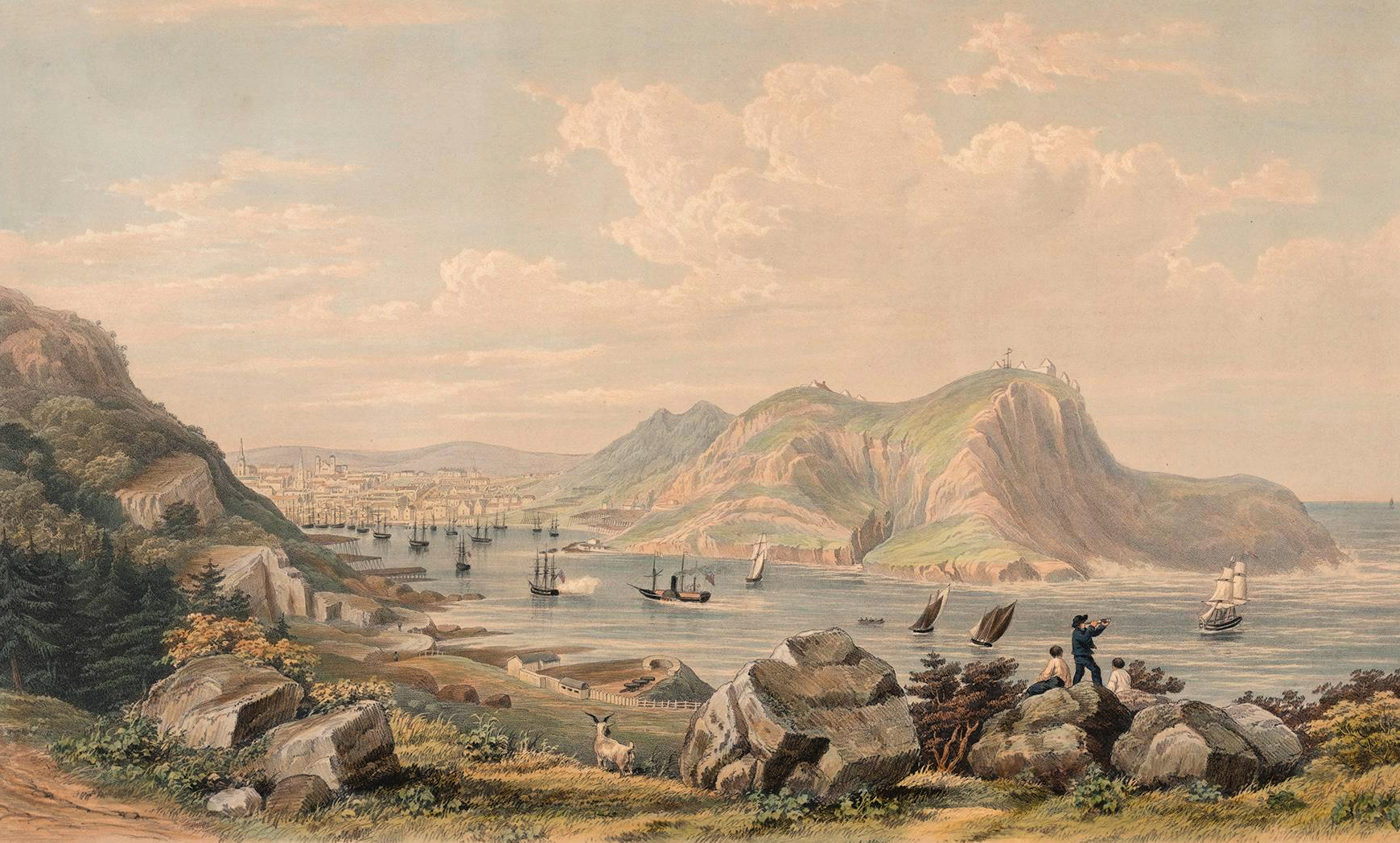
Harbour, Town and Narrows of St. John's, Newfoundland, William Pardoe Clarke, 1845, Public Domain/ Wikimedia
The HMS Boston.
The story begins aboard the HMS Boston, a Royal Navy ship anchored in St. John’s harbour. She had orders to sail for Portugal, but there was a problem: she was short of crew, and her commander had little time to fill the posts.
If she was to complete her mission —and Captain Arthur Morris had every intention of doing so —she needed to have all key posts filled, and they needed to be filled quickly.
Morris tried recruiting volunteers around St. John’s, but there was no interest. Life in the port town may have been challenging but it lacked the strict order and discipline required by the navy, besides many men were obligated to fishing merchants, had family, or would miss the taverns of town.
Still Morris had his orders and he wasn't about to let a lack of interest stand in his way.
So, on October 24th he resorted to one of the Royal Navy’s time-honoured traditions: he sent a press gang ashore.
Press Gang
A press gang is a group of navy sailors tasked with rounding up men and forcing them into service. It was a form of conscription.
If you happened to be a person who had experience with boats — like a seaman, a fisherman, a dockworker, or a fair swath of 18th century St. John’s citizens — it could, very quickly change your life. One day you might be hand-lining cod, the next you might be on a navy warship.
Usually, the gangs went after men with useful maritime experience. But the Boston was so desperately short-handed that the men sent ashore in St. John's were instructed to take whatever able-bodied fellows they could find — or, as it is often put, any men “as they might find idling about.”
So that evening, two of the Boston’s lieutenants — one by the name of Lawry — went into town to find their new crew. They quickly gathered up a small contingent of men, and by the following morning, eight had been deemed suitable for service.
On the afternoon of October 25th, Lieutenant Lawry rowed ashore with two of the newly impressed men. They were headed back into town to collect some of their belongings before joining the ranks of the Boston.
For Lawry, it may have seemed like a fairly ordinary errand. For the two men accompanying him, it was something else entirely. Their lives were about to take a turn they hadn’t chosen, and one they certainly weren’t looking forward to.
A Mob and A Murder
As Lawry and the men made their way along the waterfront, they passed beneath a large fish flake, near modern day Water Street West. Waiting under the flake was a group of citizens armed with heavy sticks.
They weren't happy about the Navy's recruiting tactics. They didn’t want a warship filling its ranks by taking their friends and neighbours from the streets of St. John’s.
The mob was determined to free the impressed men, and send a message to the crew of the HMS Boston that they would not be taken into military service.
The crowd fell upon the party and freed the two men being held for service. In the ensuing struggle, Lieutenant Lawry was struck and lost consciousness. He was carried back to the Boston, where the ship's surgeon tended to him, but he succumbed to his injuries
Manhunt
Now, a violent confrontation on the St. John's waterfront was one thing, but attacking and killing a Royal Navy lieutenant carrying out his duty, was quite another. This was no ordinary street brawl as far as the authorities were concerned. It was an assault on law and order itself, and the response had to be swift and severe.
At the time of Lawry’s murder, the Governor of Newfoundland was aboard a ship preparing to return to England. When news of the killing reached him, he sent word to the Chief Justice that he would come ashore at 8am to deal with the matter.
His orders were clear: the men responsible were to be found, and found quickly.
Newfoundland law enforcement supplemented with navy personnel poured out in to the streets, searching for the culprits. Before long, their inquiries led them to a tavern on the upper path (which we now call Duckworth Street). There, they arrested two men: Farrell and Power.
Both were charged with murder.
Court Convened
With the accused in custody, the Newfoundland justice system kicked into high gear. Less than seventy-two hours after Lawry's death, Farrell and Power at trial in the Supreme Court.
The case was over almost before it began. The men were found guilty of Lawry’s death and sentenced to hang.
But that wasn’t all.
The court decided that death alone wasn’t punishment enough. Lawry’s killing demanded something more.
A Fate Worse Than Death
Once upon a time in Newfoundland, the bodies of executed criminals were gibbeted — placed on a sort of scaffold where they decayed in full public view. Gibbets extended a criminal’s punishment into death and also served as a deterrent to others. They were a powerful reminder of what became of those who broke the law.
In the case of Farrell and Power, the court decided to go in a different direction. Rather than put the men on display, it was decided that their bodies should be delivered to surgeons, where they would be dissected and anatomised.
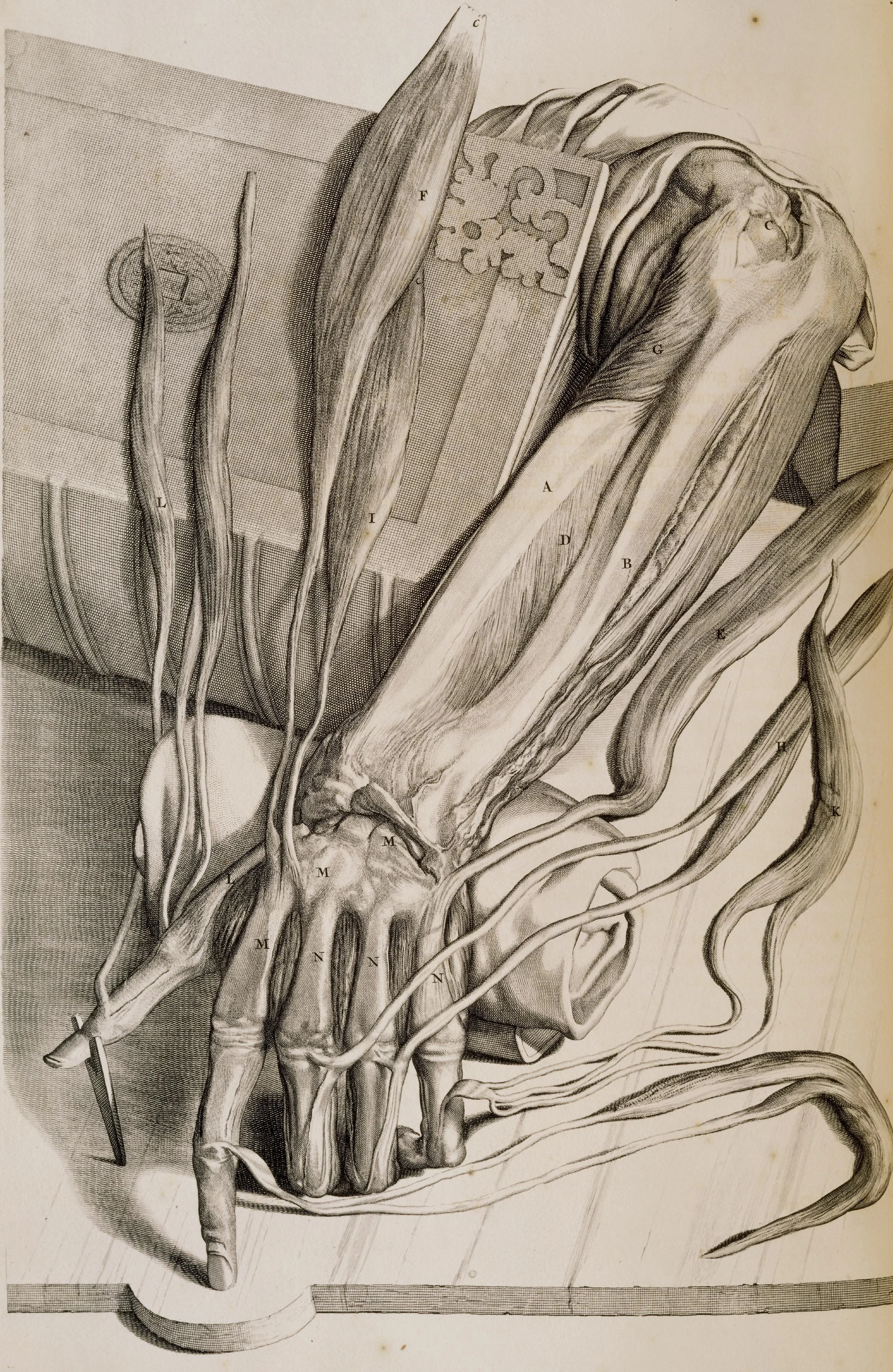
Musculature and bones of the forearm and hand, Gerard de Lairesse/ public domain
That is, after Farrell and Power were hanged, they were to be cut apart and broken into pieces.
In those days, perhaps even more than now, a proper burial mattered. Cutting up the body denied the traditional rites of death and, for the convicted, knowledge of the coming indignity brought an extra layer of suffering.
As strange as it may seem today, dissection was an accepted practice at the time. It had been written in the English ‘Murder Act’ of 1751
“[I]n no case whatsoever the body of any murderer shall be suffered to be buried; unless after such body shall have been dissected and anatomized as aforesaid…”
An act for better preventing the horrid crime of murder (1751),
Statute of Great Britain
Carrying Out The Sentence
On October 30, Farrell and Power were led from their cells to an open stretch of ground known as The Barrens, somewhere near what is now The Rooms.
Waiting for them was the hangman, his face covered in black wool. He wasted no time. Before a crowd of onlookers, Farrell and Power were hanged.
The reports of the dissection and anatomization are brief. But given the timing of the execution, it’s entirely possible that surgeons in St. John’s spent Halloween 1794 doing the gruesome work of cutting up the bodies of Farrell and Power.
The entire affair, from crime to punishment, unfolded in less than a week. As Rev. Charles Pedley wrote in his 1863 book, The History of Newfoundland:
The criminals had been full of lusty life and riotous liberty on the Saturday evening. On the Tuesday they stood in peril before the tribunal of justice. On the Wednesday they heard the sentence of death. On the Friday they were dangling lifeless from the gallows, and on Saturday, all within a week, they had probably become the mangled offensive material of the dissecting room.
According to Murphy’s Old St. John’s the remains of Farrell and Power — or whatever was left of them — were uncovered during roadwork in the 1860s, near the site of their execution.
What happened to them after that is anyone’s guess.
-
Oddities from Our History, Book of Newfoundland
Conscription and Impressment, Encyclopedia of Newfoundland and Labrador
Days of Press Gangs…, Don Morris, Gander Beacon, June 6, 1979
Old Newfoundland : A history to 1843, Patrick O’Flaherty, 1999
History of Newfoundland, Charles Pedley, 1863
The Murder of Lieutenant Lawry:
A Case Study of British Naval Impressment in Newfoundland, 1794, Keith MercerMurphy’s Old St. John’s, John Murphy, 1916