French Invasion and False Alarm: The Story Of Trinity’s Fort Point
Picture this: It’s a quiet Sunday morning in Trinity, NL.
Half the town is in church, heads bowed in prayer, when suddenly a thunderous roar echos across the harbour.
There’s instant panic.
It isn’t because no one knows what’s happening — that’s the problem. It’s a sound they’ve been dreading. The noise had come from the signal cannon at Fort Point. The watchman at the mouth of the harbour had just sounded the alarm:
the enemy was at the door.
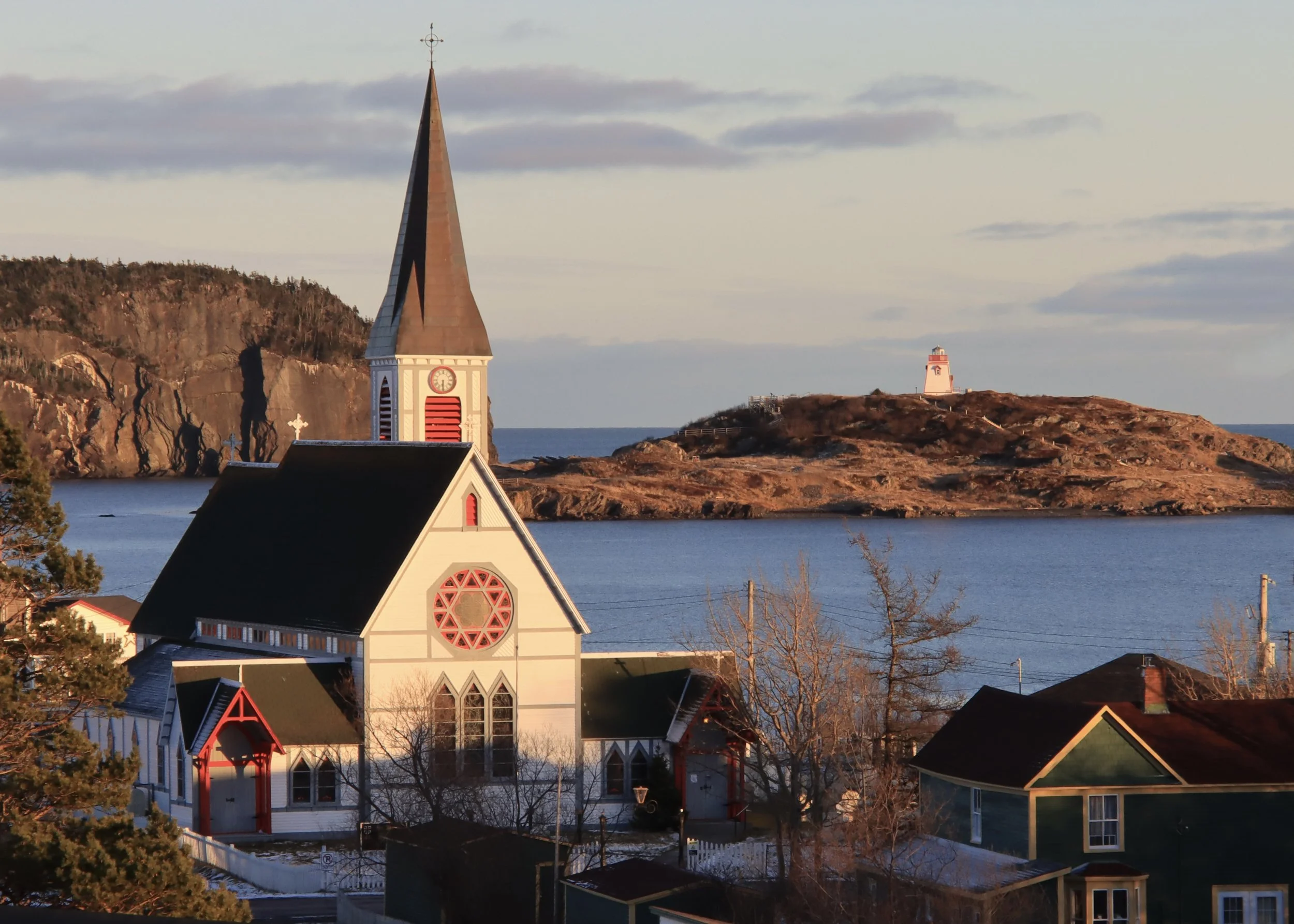
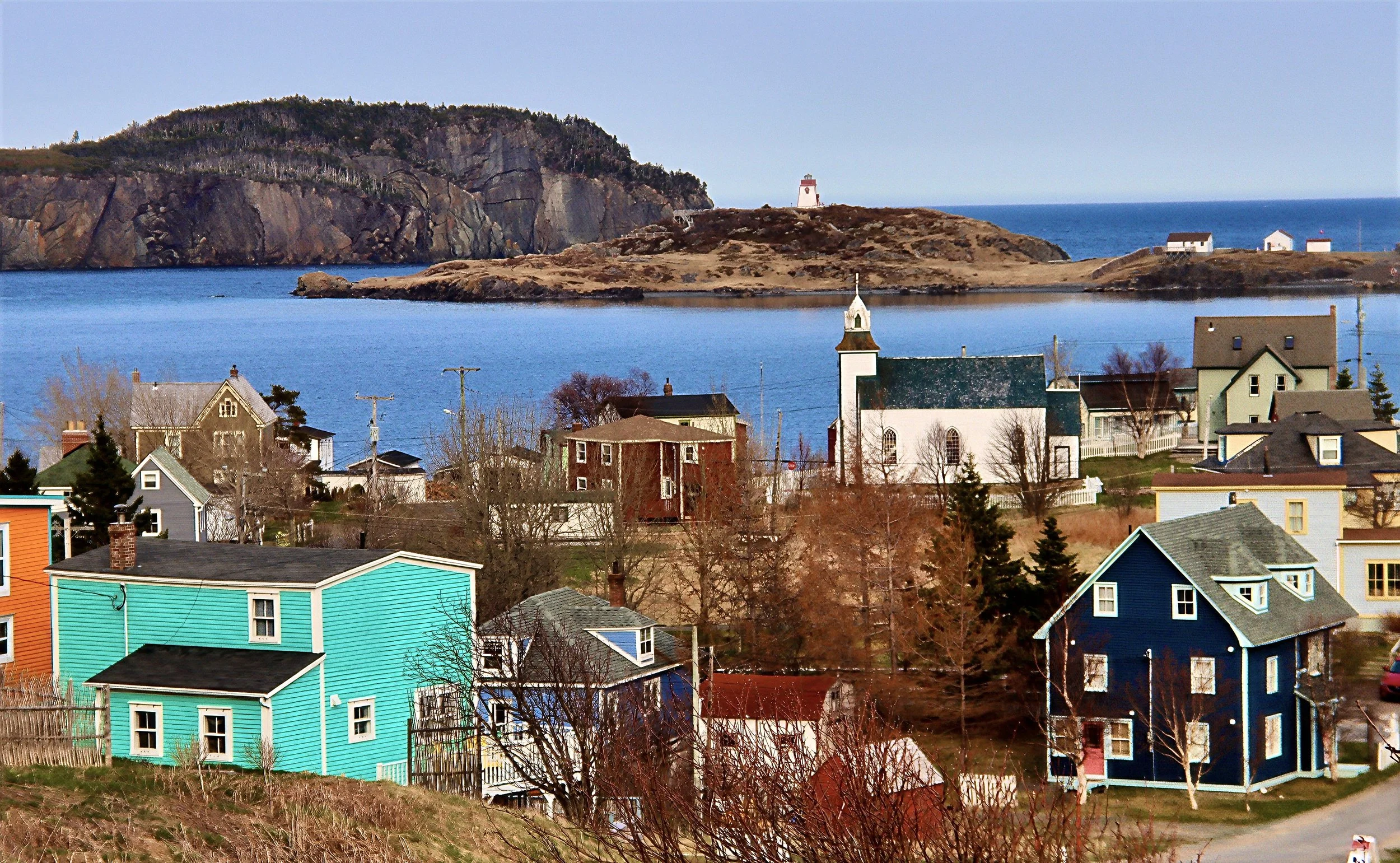
St. Paul’s Anglican Church, Trinity with Fort Point in the background.
The Story Of Fort Point and Trinity
To understand what was unfolding that Sunday morning, you have to understand Fort Point.
Because that single blast —and the panic it sparked — was only one event in a long, and colourful, history.
These days it holds a picturesque navigation light and offers stunning views of Trinity Bay., but long ago, even before any cannons were ever erected, Fort Point was an important part of the Trinity story.
Fort Point is a long, narrow finger of land that cuts across the mouth of Trinity Harbour, separating the multiple coves from the open water of Trinity Bay. It is probably one of the features of the port that lead Sir Richard Whitbourne to describe Trinity as “the best and largest harbour in all the land.”
First and foremost, Fort Point is a natural breakwater, it shelters the inner harbour from the worst of the Trinity Bay weather. Whitbourne would have recognized that The Point would protect boats, coastal buildings and fishing infrastructure during heavy seas — the worst waves would strike against the rocks of the point, not the shores inside.
But Fort Point offered more than shelter
It offered control.
Whitbourne would have appreciated the tactical advantage offered by The Point. Defence would have been a serious consideration. Newfoundland was a territory in dispute, the English and French fought for control of the island. On top of that, piracy was a real threat —as Whitbourne could personally appreciate, having been captured and released by Newfoundland’s ‘Pirate Admiral’ Peter Easton.
From Fort Point it would be easy to protect the ships and settlements inside the harbour from any unfriendly ship. A person keeping watch from The Point could see boats coming toward Trinity Harbour, and raise the alarm. More than that, if the boat planned to enter the harbour it would have to pass through a narrow channel between the Point and Skerwink Head — a sort of choke point.
From Fort Point, a watchful eye—and eventually, a well-placed cannon—could decide what entered Trinity Harbour…
…and what didn’t.
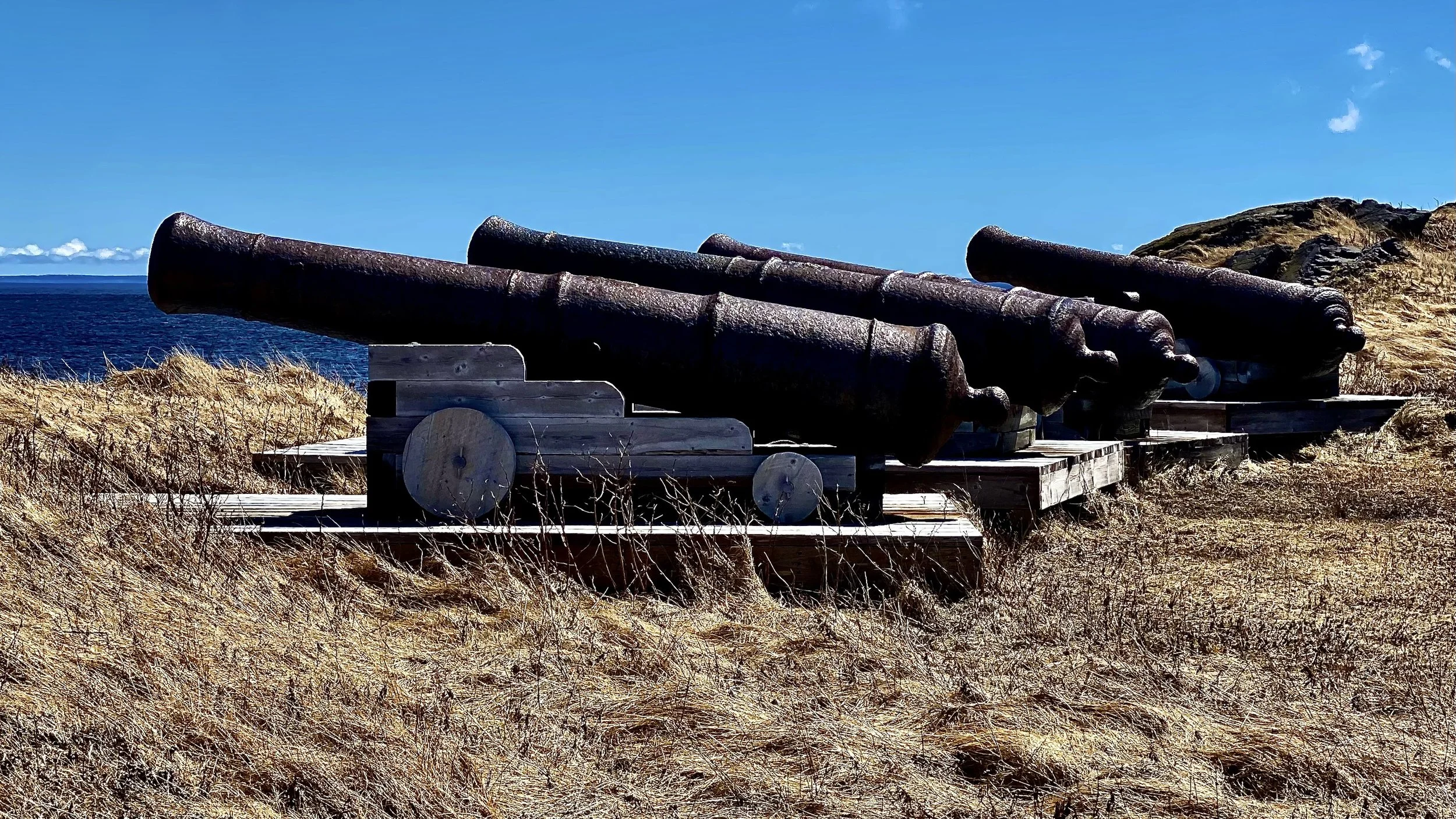
Cannons at Fort Point in Trinity, Newfoundland and Labrador
An Ounce of Prevention
So, to secure English interests in the area, Fort Point was heavily fortified.
By the end of the 1740s, it held gun batteries, parapet walls, a storehouse, and a magazine, with plans underway to build barracks for a garrison of more than 200 Royal Artillerymen. It was meant to be a formidable defensive installation — a real deterrent.
And, for a time, it was.
But in 1758, barely a decade later, the Royal Artillery were withdrawn. Without them, the fort lost its edge. Guns without gunners, walls without watchmen—it was no longer the threat it had been meant to be.
Trinity was exposed once again.
The Seven Years War
That vulnerability would not go unnoticed.
In 1762, Britain and France were battling for control of North America in the Seven Years War. In June, French troops struck St. John’s, compelling the British to surrender the port.
News travelled quickly.
By early July, word reached Trinity — and with it, came a concern they might be next.
Trinity was no minor outport. In the summer months, its population swelled past 2,000. Its stores were well-stocked, its fishing rooms active, and its fields full of livestock.
It had everything an occupying force might need.
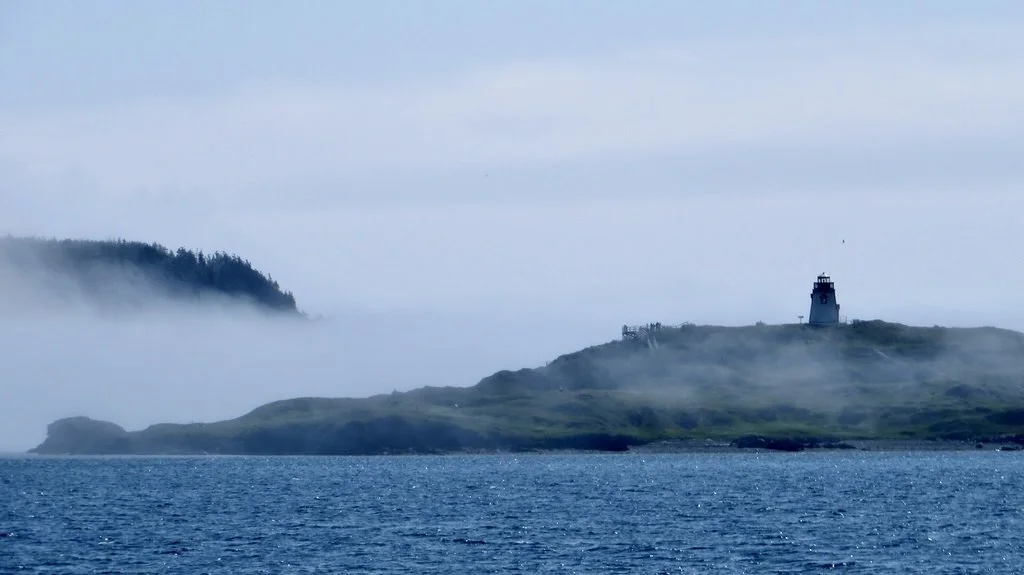
Fort Point in the fog
On July 16, the town’s fear became a reality. From the fog off Fort Point, a French ship appeared.
They called for a delegation. There was little choice but to answer. Terms were agreed: surrender the town, allow a French garrison, and provide provisions. In return, the inhabitants would be spared.
For the moment, it was the best outcome Trinity could hope for.
At the center of the negotiations was Benjamin Lester—merchant, magistrate, and reluctant intermediary. He acted as a go-between for the town and an occupying force that leaned heavily on threat. Their message was simple: comply, or suffer the consequences. At one point, they warned Lester directly — fail to provide enough livestock, and his house would be burned.
Before long, they started putting their warnings into action.
Fishing stages were dismantled. Boats were burned. The remaining guns at the fort were smashed and tossed into the ocean. What had once been a line of defence was rendered useless.
And then French priorities shifted.
Word reached the Trinity that the French hold on St. John’s was deteriorating. British forces were regrouping, and preparing a counterattack. The French needed every available man.
Suddenly, Trinity was no longer the objective.
So on August 1, as abruptly as they had appeared from the fog, they vanished.
The terrible two weeks of occupation were over.
On July 16, the fear became real.
Out of the fog off Fort Point, a French ship appeared.
They demanded a delegation. There was little room for refusal. Terms were struck quickly: surrender the town, allow the French to establish a garrison, and provide what supplies they required. In return, no harm would come to the people.
For the moment, it was as good a deal as Trinity could hope for.
At the center of it all was Benjamin Lester — chief magistrate, merchant, and now reluctant negotiator. He brokered with the occupying force, who relied less on diplomacy than intimidation. Their message was clear: comply, or watch your property burn. At one point, they warned Lester outright that if he failed to provide enough livestock his house would go up in flames.
By the end of the first week, the threats turned real.
Fishing stages were torn down, boats were burned and the remaining guns at the fort were smashed and rolled into the sea. The occupation was dismantling the town.
And then, as suddenly as it started, it finished.
Word reached the French that the situation in St. John’s was unraveling. The British were regrouping, and mounting a counterattack on the Avalon Peninsula. Every available man was needed.
Trinity was no longer the prize. So, on August 1, as abruptly as they had arrived, the French were gone — the terrible two week occupation was over.
The American War of Independence
The fort did not stay quiet for long.
Around 1780, in the thick of the American War of Independence, it was rebuilt. American privateers had begun to prowl Newfoundland’s coast, slipping in and out of harbours, testing defences, taking what they could. They had already struck at Catalina. Trinity was watching—and this time, it intended to be ready.
Fortunately, there was no attack.
The War of 1812
By 1812, Britain and the United States were at war again — the War of 1812. While Newfoundland hadn’t seen any direct attacks, the island was strategically important for the British, and Trinity’s merchant firms decided they would prepare for any eventuality. William Kelson, of the Slade firm, took charge of the rebuilding Fort Point.
To bolster the town’s defenses, Kelson took charge of raising a local force: fifty men, hastily organized but eager to protect the town. They became known as the Loyal Trinity Volunteer Rangers.
They took to the task with surprising enthusiasm.
On Fort Point, under the watchful eye of British marines, they drilled and marched, their boots stomping patterns into the ground where the once wandered as fishermen. Kelson’s commands rang out over the harbour. It was remarkable demonstration of commitment to king, country and home.
If attack was coming, their best chance at success would come from an early warning. So Kelson appointed a watchman.
Posted on Fort Point, the watchman kept a vigil beside the signal cannon, scanning the horizon for ships that did not belong. His instructions were simple:
If the enemy appeared, fire the cannon — one blast — and the whole town would know.
That Fateful Sunday
One Sunday that is exactly what happened.
Much of Trinity was in Church when the signal cannon fired. Kelson leapt from his pew, calling the Rangers to duty, urging them to arms. The Volunteers gathered, their hearts pounding; the invasion they’d practiced for — but had hoped to never see — was upon them.
They made their way across the arm to the fort.
They found no enemy ship in the bay, in fact the horizon was clear. Instead they met with two sheepish grins.
While everyone was in church, two mischievous young men had crossed the arm, distracted the watchmen, and fired the signal gun, just to see what would happen.
It had all been a prank.
Kelson could not have been amused.
Trinity, Newfoundland and Labrador
Ending With A BAng
Trinity passed through the War of 1812 without incident — no enemy ships appeared on the horizon, and the Loyal Trinity Volunteer Rangers were not called to battle.
In fact, it may be that the boys’ mischievous moment — the false alarm and Kelson’s summoning of the Rangers — marked the end of Fort Point’s military life.
After the all the building and rebuilding, the French occupation, and decades of watchful eyes fixed on the sea… the military life of Fort Point could have slowly faded into history, instead it ended with a bang — a prank that brings a smile, even 200 years later.
-
Fort Point Military Site, Trinity Historical Society
Sir Richard Whitbourne National Historic Site Plaque, Newfoundland and Labrador Tourism
French Incursions at the Old Town of Trinity, Daily News, January 11, 1955
The Legacy of Fort Point - Military Fortification, Light House and Tourism Haven, Community Stories
Trinity Harbour, Newfoundland Magazine, July 1917
Fort Point Lighthouse Interpretation Centre, Museum Association of Newfoundland & Labrador
The Wars and Newfoundland Society: The Home Front, Heritage NL
History of Trinity, Newfoundland Quarterly 56, March 1957
Trinity Gun, Atlantic Guardian, vol. 08, no. 03, March 1951
Trinity, Observer’s Weekly, June 15, 1937
Slade and Kelson Diaries, 1815, MUN DAI
Trinity in the Past, Trinity Enterprise, Nov 20, 1909



French forces once seized Trinity Harbour. Decades later, a cannon blast sent the town into panic—for nothing. A true story of war, fear, and a prank that echoed through history.