Sister Gertrude’s Miracle
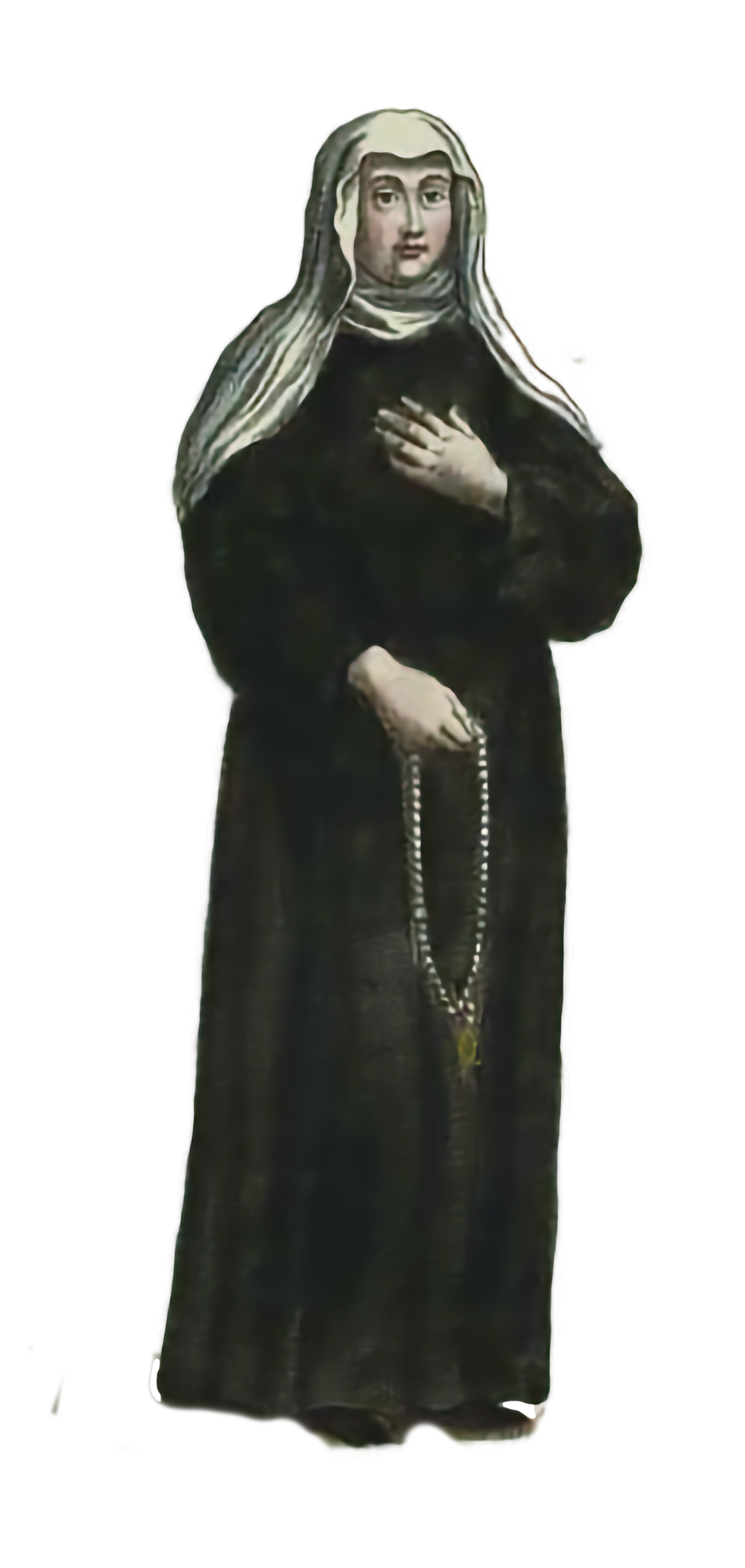
When Sister Mary Gertrude walked down the gangplank of the SS Polino onto the wharf at St. John’s harbour, she was greeted by people who had come for one reason:
To see her for themselves.
They had heard her story. It had appeared in the local papers and beyond, and it was the kind of story that seemed almost too astonishing to believe.
When Mary-Gertrude, better known as Sister Gertrude, left Newfoundland, she could barely lift her head. She could barely walk. And those closest to her, feared she was dying.
Now she had returned, walking with ease, looking as though nothing had ever been wrong.
What had happened to Sister Gertrude?
Well, if you asked her she’d tell you it was nothing short of a miracle.
Sister Mary Gertrude
Sister Mary-Gertrude was born as Agatha Kennedy in Conception Harbour, NL, on February 5, 1876. Her early life was like that of many in her hometown. She went to school and received her early education from the Irish Sisters of Mercy. Eventually, her path diverged from that of her schoolmates, and she travelled to Ireland, where she furthered her education at a church-run boarding school.
At 16 years old, she returned to Newfoundland and joined the Sisters of Mercy, taking her official vows in 1894.
It wasn’t long before things took a tragic turn for Sr. Gertrude. In September 1895, she had an attack of what was then called St. Vitus’ dance, accompanied by seizures. St. Vitus’ dance causes the body to move in quick, uncoordinated movements, affecting the face, hands and feet. These days, it is better known as Sydenham’s (or rheumatic) chorea.
The disease struck Sr. Gertrude again and again. She experienced attacks in the spring and fall of 1896, which left her with curvature of the spine and contraction of the muscles.
In the spring of 1897, the disease appeared again and left her with partial paralysis, causing her to lose the use of her right leg for several months. Another attack followed in November. Then she had a brain hemorrhage. Mother M. Joseph Guinane, her Superior, recalled that the illness “made our Sister a complete invalid and took away her appetite.”
Sr. Gertrude was forced to use an steel collar to hold her head up. Her physician, Dr. Freebairn, later wrote that he considered her case to be hopeless.
Turning to Faith
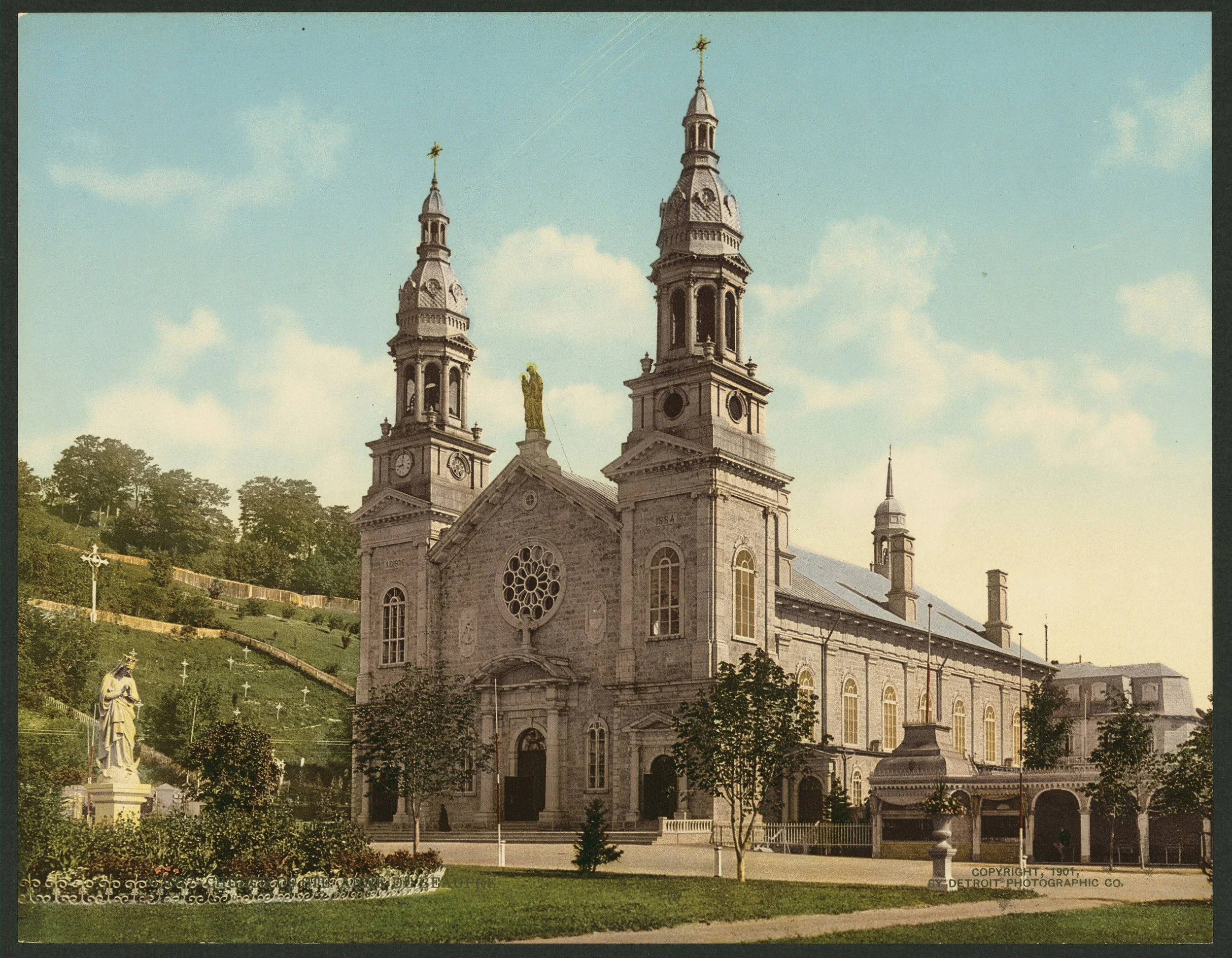
Church of Ste. Anne de Beaupré (1901), Public domain, via Wikimedia Commons
After two years of worsening health, at the suggestion of the bishop, Sister Gertrude made a pilgrimage to the Shrine of Ste. Anne de Beaupré in Quebec.
The shrine, which is about 30 kilometres from Quebec City, had long been credited as the site of miraculous cures, a place where the sick and injured were healed.
Joined by her mother and the Mother Superior of her convent, Sr. Gertrude began her pilgrimage. They arrived at the Shrine of St. Anne in the middle of July and started to pray. They were completing a novena —a nine-day prayer—which was set to end on July 26, the feast day of St. Anne.
Day after day, they completed their devotion, and when they reached the end, Sr. Gertrude was no better than when they began; her neck was twisted and her head was bent forward. It seemed St. Anne would not answer her prayers.
Gertrude hoped she would have the strength to make it back to Newfoundland. Once again, she turned to God for strength. On the morning of July 27, Sr. Gertrude decided to receive Holy Communion.
With the aid of her companions, she approached the altar, knelt, and suddenly everything changed.
In Her Own Words
“I was kneeling by the rails earnestly praying for strength to enable me to go home,” Sr. Gertrude later recalled, “when all of a sudden, without any physical premonition, I felt as if a cord within me burst and I found myself unconsciously straightening my body and my head which, without the steel collar, I had not been able to lift for years. I now raised without the least difficulty. I got on my feet and without any assistance walked down the church as well as I am now.”
It was the miracle they had been praying for — Sr. Gertrude had been restored to good health.
“My mother and Sister Joseph were both surprised and overcome,” she remembered, “and we remained a considerable time in the church praying. After leaving the church, I ran up the fifteen steps leading to the hotel as briskly and with as little effort as when I was a child. The pains had all left me, the deformities of my body had disappeared, my appetite came back, and I have not had any of my old trouble since.”
“I believe,” she said, “that I am thoroughly cured, thanks to the Almighty God and good St. Ann.”
Returning to Newfoundland
On August 13, 1899, Sr. Gertrude arrived back in Newfoundland. Her homecoming was covered in local newspapers and marked by a special sermon from Bishop Howley, who summarized the event by saying:
“The Sister, in whose behalf the miracle has been wrought, had been given up by medical men as one whose disease could not be cured. She was so infirm that it was thought, by those who saw her, she would not reach the Shrine. She now returns, full of light and grace, cured of her infirmity, and furnishing a wondrous proof of the power of God.”
The next day, Sister Gertrude returned to the convent and, as her parish priest recalled, was “never better in her life.”
Her mother presented a statue of St. Anne to the local church.
Sister Gertrude would live for another 63 years, dying on February 9, 1963, at the age of 87.
Miracles and Mystery
Whatever happened to her in that church in Quebec on the morning of July 27, 1899, it changed the course of her life.
For Sister Gertrude, there was no mystery about it. She believed she had been cured through the intercession of St. Anne.
Even for the doubters, there was no denying that something extraordinary had happened to Sister Gertrude. The woman who had gone to Quebec wearing a steel collar and barely able to walk, returned home on her own two feet with her held high.
And whether you consider it a miracle, a mystery, or a medically plausible recovery, Sister Gertrude’s extraordinary transformation at the altar remains one of Newfoundland’s most remarkable strange truths.
-
The Marvellous Cure, Daily Review, August 14, 1899
Sister Gertrude’s Return, Evening Telegram, August 14, 1899
The Annals of St. Anne, Decemeber, 1899
Obituary, Sr. Mary-Gertrude Kennedy, The Monitor, February 1963
Brief Historical Sketch of St. Anne de Beaupre, Rev. Philip Toque, Evening Telegram, Sept 2, 1899
Catholic Notes, The Casket, August 10, 1899
Robert J. Freebairn, Who’s Who In and From Newfoundland in 1927, 1927
The Bishop’s Sermon, Evening Telegram, August 16, 1899
St. Anne, Britanica