The Grim Secret of the Three Brothers
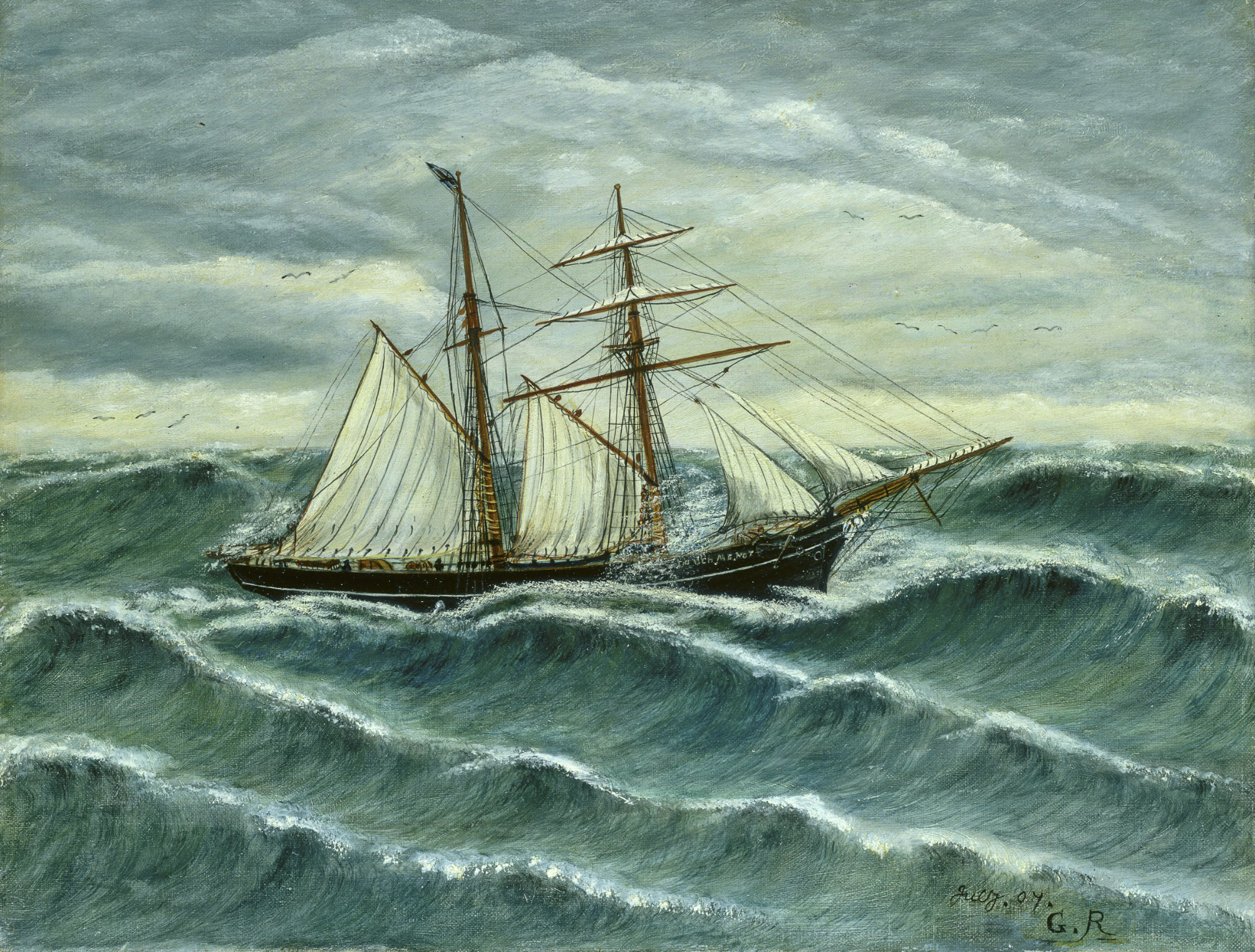
Royal Museums Greenwich, Public domain, via Wikimedia Commons
It seemed like an ordinary Sunday in Little Codroy River until word came from offshore: three miles out, a schooner — or what was left of her — was being battered by the waves.
Five boats set out expecting a salvage job; it quickly turned into something they’d never forget.
A Mystery Ship
It was September 14, 1873 and, along the Little Codroy River in the southwest corner of Newfoundland, it was a fine late-summer day — or so it seemed from shore. The skies were clear and visibility was good, but the sea was running high, throwing white spray against the rocks.
It was just before noon when word started to spread: a ship had been spotted offshore, three or four miles from Northwest Cove, labouring in the heavy swell.
From shore, there was no way to tell exactly what to expect but it seemed unlikely to be any sort of rescue mission. The men who had seen the ship said she was badly damaged and barely still afloat.
In Little Codroy River they had little trouble imagining what happened. Just three weeks earlier, on August 24, a terrible gale had swept down the coast, battering vessels all along the shores of Atlantic Canada.
Some boats had never been heard from again.
“We have by telegraph some particulars of the terrible storm which swept over the Eastern part of Nova Scotia and over Cape Breton on Sunday night last. Nothing equal to it has been known nearly a century. Some thirty Newfoundland or Newfoundland bound vessels are amongst the sufferers to a greater or lesser extent...”
This schooner, they assumed, was another victim of the storm. But where she had come from — and what had happened to the people aboard her — they couldn’t say. It wasn’t likely they were still on the ship, not this long after the storm.
Even if no lives were at stake, the boat was worth investigating. Despite her damaged state, she might be a valuable find — if she could be brought ashore, repaired and refloated.
If they stood a chance of saving her, they needed to get to her before she sank, or was battered on the rocks. So, despite the high seas, five boats set out toward the damaged ship with all the gear they would need to secure her and tow her home.
Fighting against the waves, through the afternoon they crawled toward the unknown vessel. It was almost sunset when their prize came into view. She was a fishing schooner, and a decent-sized one too, perhaps 50 tons or more. Her hull was battered, her sails and spars gone, and there was no sign of anyone aboard.
Painted across her stern in stark white letters was:
Three Brothers
Petite Riviere, NSIn the fading light, the white letters seemed to almost glow against the dark hull.
An abandoned ship was what the expected to find. Still, there was something unsettling about finding an empty ship at sea, especially one of this size. Whatever had happened, it was clear that the crew had not simply rowed away from her. Men did not abandon a fishing schooner in the open Atlantic unless something had gone terribly wrong.
If they left, they must have felt staying aboard meant certain death.
A Grim Discovery
Whatever unease the salvagers felt, it didn’t change the task at hand: they had found a deserted Nova Scotian wreck, and a potentially valuable one, if they could keep her afloat and get her into port.
They began long haul toward shore. For three days and three nights, they laboured to bring the Three Brothers in.
When they finally had her safely ashore, there was still work to do. The schooner was waterlogged, and before they could properly inspect her, they had to pump her dry.
It was then they made their grim discovery.
As they peered into the darkness of the forecastle — the small living quarters in the bow of the vessel — they saw someone, or something peering back.
On the floor, was a body. Beyond it another, and another — the crew, at least some of it, hadn’t abandoned ship after all.
Altogether, five bodies lay in the forecastle, their remains badly decomposed, but still dressed in their oil clothes. They looked as though they had gone below when the storm became too fierce, seeking shelter from the wind and sea.
It was impossible to know for sure how long the men had been dead, but if they had been victims of the hurricane. It meant their corpses had been sailing the seas off western Newfoundland for nearly three weeks.
The Burial
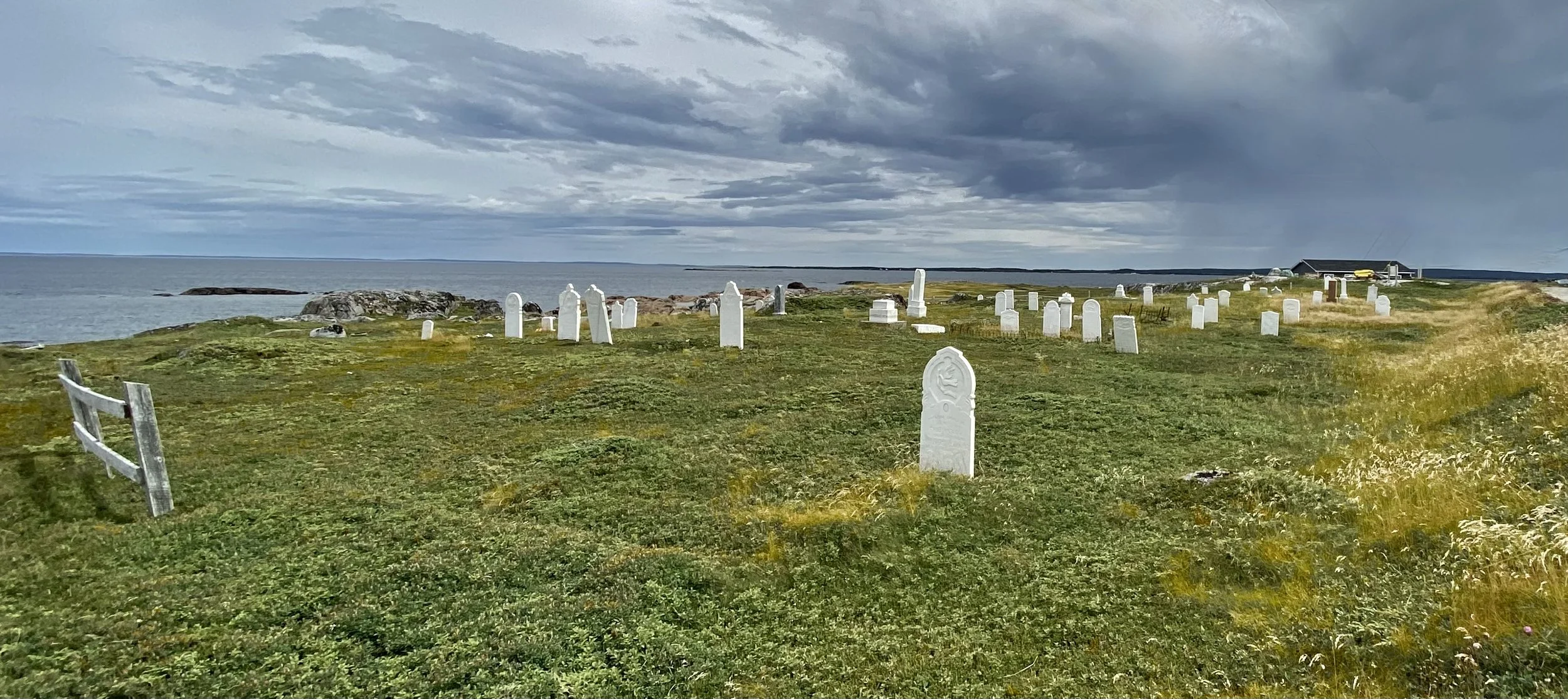
Coastal Graves, Musgrave Harbour, NL
Among the things recovered from the Three Brothers was $5.25 in cash, which the people of Little Codroy River used it to help pay for the men's burial. They placed the bodies in wooden coffins and laid them to rest near the English Cemetery.
There were other things too, things that told a more personal story. Scattered among the wreckage were the crew’s belongings: a handkerchief, stockings, clothing, a hymnal and a Bible. There was a fish jack (or boat), too.
The hymnal had the name James L. Riesey of Petite Riviere written on one of its pages. The Bible carried the name Milford Fralick, written several times, along with a reference to his having been aboard another schooner, the Alliance, in 1870. On the back cover was another name: David Abbott, born in the year 1825.
There were other clues, too. The handkerchief and stockings carried the initials M.M.H., and the fish jack was engraved with the letters J.V.
Among the belongings were boots and clothing that clearly belonged to a boy — but there was no small body among the five they had found.
The boy was missing.
They could only assume he had been swept overboard, and that somewhere in Petite Riviere, a family was still waiting for him to come home — a family that would never know what became of him.
A Letter
It was a terrible thought, and one the people of Little Codroy River couldn’t abide. They didn’t have good news for the families of the Three Brothers’ crew, but it was better they know what happened.
Rev. M.F. Howley, who would later become Archbishop of St. John’s, was early in his career. In the summers of the early 1870s he was serving the churches along the island’s west coast, including the area around Little Codroy River. He took it upon himself to spread word of the tragedy. He wrote to the newspapers, sharing what was known about the wreck, detailing the five bodies and the belongings that had been found aboard.
His letter was printed in several island newspapers, and soon the five dead men, who had been buried anonymous, had names and a story.
Lost on the Labrador
The Three Brothers left Petite Riviere, Nova Scotia on June 12th, bound for the Labrador fishery. Captain Stephen Sperry, one of the schooner’s owners, was in command, with his brother William serving as mate.
-
Stephen Sperry (Captain)
William Sperry (Mate)
Frederick Vogler
Philip Vogier and young son.
William Vogler
James Vogler
Isaac Risser
Enos Harman
Martin Harman
John Johnson
Edward Dagley
J.W. Falt
Milford Frelick
In all, fourteen people were sailing aboard her — among them three sets of brothers, one of whom had brought his young son.
After a summer cod fishing off Labrador, they were working their way south when a terrible hurricane struck. All the men were regarded as excellent seamen, but the storm was too much. The ship was battered, her spars and sails ripped away. More than half her crew were swept overboard; the rest died below deck.
It was a terrible tragedy, one that must have struck the families of Petite Riviere very deeply.
Nine people were lost without a trace. Five others were buried far from home. For the families, the news from Little Codroy River was certainly no happy ending — but, at least, it was an ending.
Too often, ships vanished into the North Atlantic and took their stories with them.
The Three Brothers did not.
After nearly three weeks at sea crewed by her dead, the Three Brothers finally came ashore, carrying the last chapter of their story with her.
-
Wreck of The Schooner Three Brothers, Morning Chronicle, October 06, 1873
Tidings of the Three Brothers, Morning Chronicle, October 14, 1873
Vignettes of the West, Western Star, May 24, 1975
Ghost ships bore cargoes of mystery and death, Compass, June 12, 1991
Stories and Events in Volger Lives, RootsWeb
Note: In the article identifying the crew (Morning Chronicle, October 14, 1873) it states that seven bodies were found in the Three Brothers. For my re-telling I kept with the five mentioned in M.F. Howley’s letter. I’m not sure if there is an error in one of the numbers, or whether more bodies were subsequently found in the ship.



A battered schooner discovered off Newfoundland’s west coast seems to have no one aboard. When rescuers bring her ashore, they discover a tragedy that began weeks earlier.